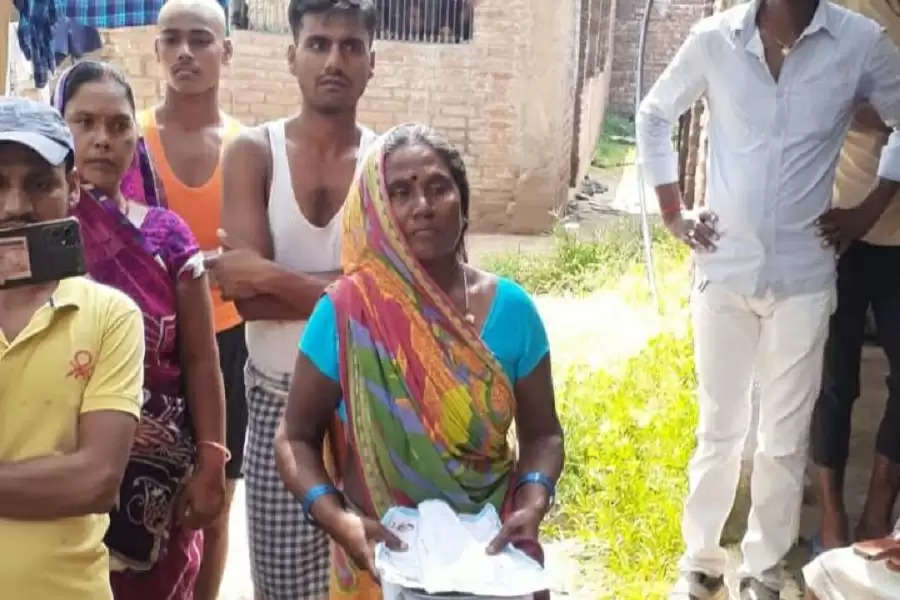






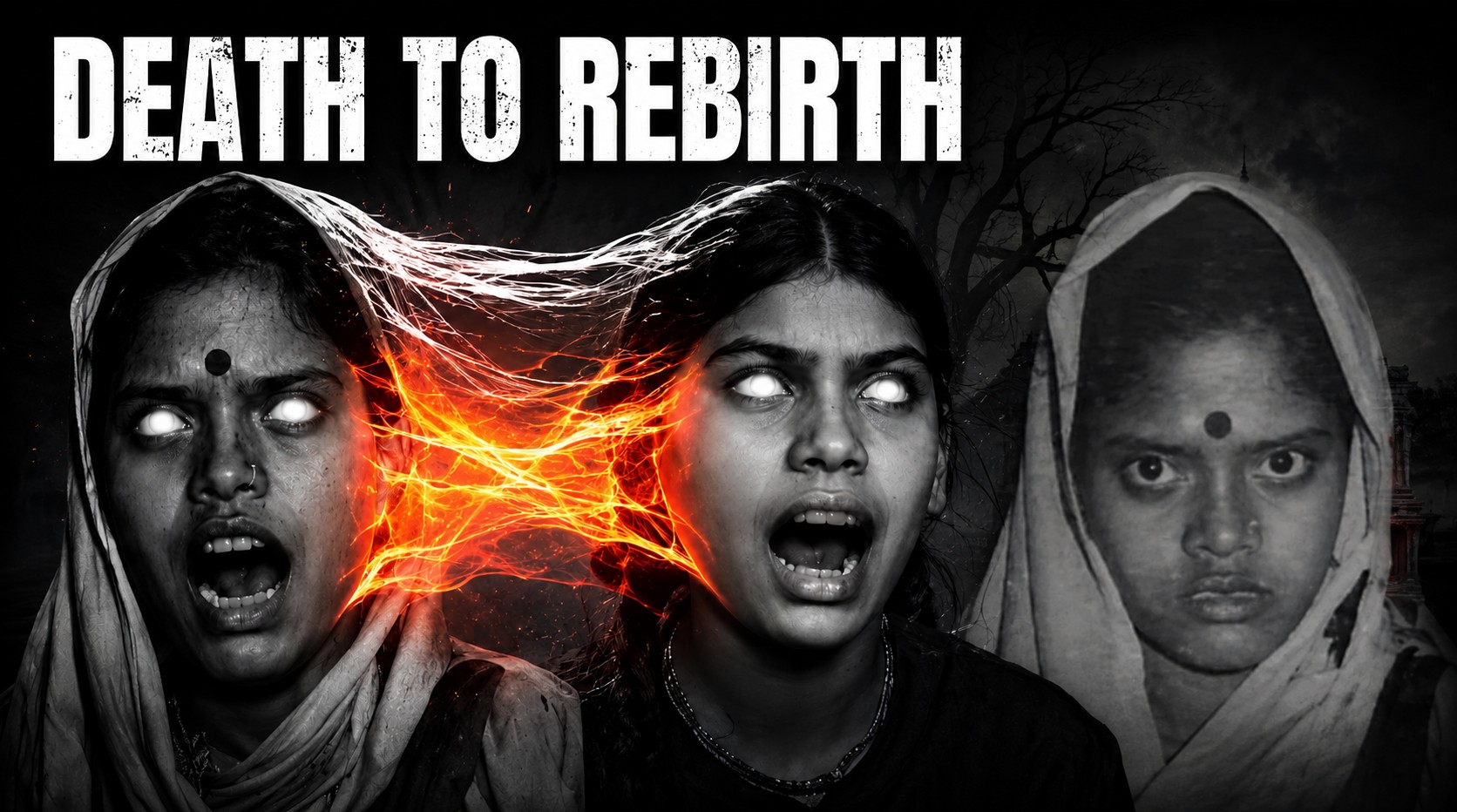
This case from the free book named “Scientific Evidence for Reincarnation, NDEs and Karma with Personal Stories”. “Scientific Evidence for Reincarnation, NDEs and Karma with Personal Stories” book contains a lot of reincarnation cases and NDE cases. You can directly Download “Scientific Evidence for Reincarnation, NDEs and Karma with Personal Stories” book for free from the internet or from this website: https://evidence-for-reincarnation.weebly.com
Research & Investigation
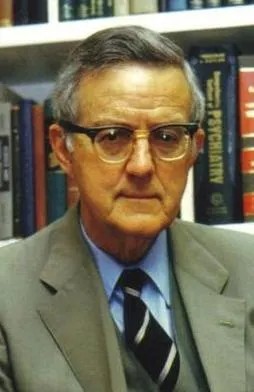
The case was primarily investigated by Dr. Ian Stevenson, Dr. Satwant Pasricha, and Nicholas McClean-Rice. Later, Parmeshwar Dayal, Dr. Antonia Mills, and Kuldip Dhiman conducted additional investigations and follow-up research.
The original 1989 study described it as a possession-type case with evidence of alleged paranormal knowledge, rather than definitive scientific proof of reincarnation.
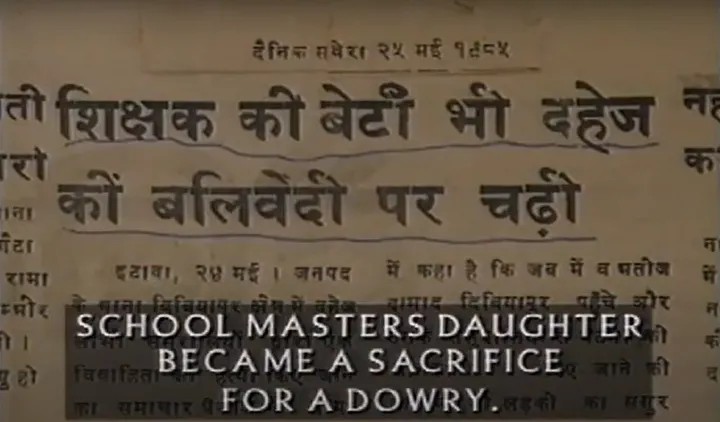
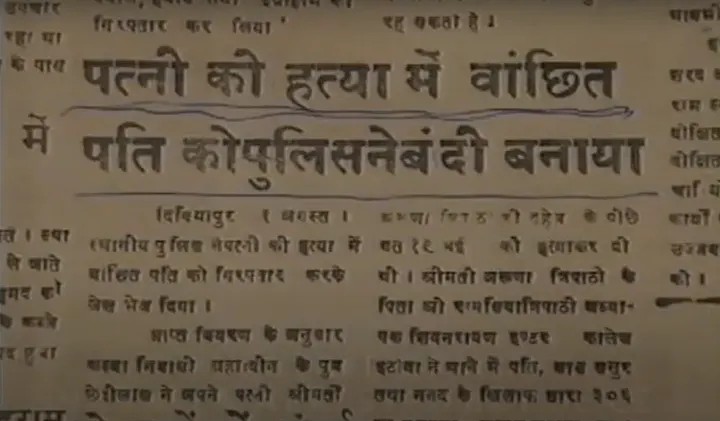
The Sumitra Reincarnation Case is one of the most unusual cases of alleged reincarnation to have drawn attention from researchers and investigators. The story begins not with Shiva, but with a young woman named Sumitra Singh, whose life, until 1985, appeared entirely ordinary. Sumitra was about seventeen years old and lived with her husband and their young child in the village of Sharifpura in the Farrukhabad District of Uttar Pradesh. She had never attended school formally. She could read and write a little, having learned the basics from an older cousin, but her education remained extremely limited. Nothing in her early life suggested that her name would one day become part of an investigation into one of the most unusual cases of apparent possession ever reported in India. Then, in early 1985, something began to change. Sumitra started experiencing repeated episodes of loss of consciousness. Her eyes would roll upward, her teeth would clench, and the episodes could last from a few minutes to an entire day. Sometimes she spoke while in these trance-like states. On some occasions, she appeared to take on other identities, including that of a woman who was said to have drowned herself and a man claiming to have come from another part of India. Those earlier identities were never independently verified, but they provided the first indication that something unusual was happening.
Also Read: Battery Draining Fast? 7 Phone Settings You Should Change Right Now
The episodes became disturbing enough for Sumitra’s family to seek help from local healers. One of the people who tried to calm her was Vishwa Nath, a distant relative and cultivator who had no professional experience in cases of this kind. His presence appeared to have some temporary effect, but the episodes continued. Then, in July 1985, Sumitra made a statement that would later seem impossible to ignore. She predicted that she would die three days later. On July 19, the predicted day, she lost consciousness again. This time, however, the people around her believed something far more serious had happened. Her breathing and pulse appeared to stop. Her face became pale, and those gathered around her believed that she had died. Some began to mourn her, while preparations were made in expectation of her funeral. The family later estimated that she remained apparently lifeless for several minutes. But there was an important limitation: there was no doctor in or near the village, so nobody could medically establish that Sumitra had actually experienced clinical death. Even the researchers who later studied the case were careful to describe what happened as an “apparent death.” And then, unexpectedly, she revived.
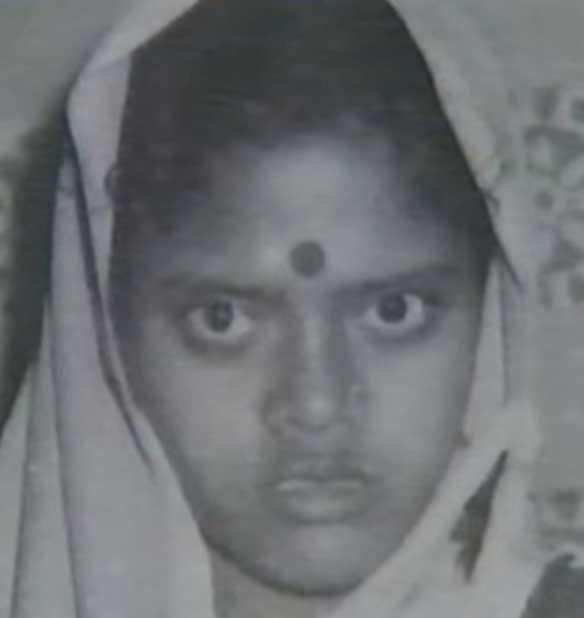
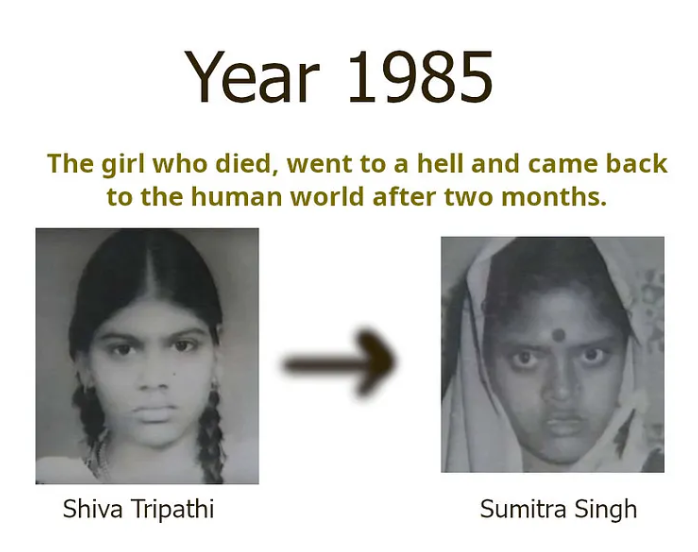
The revival should have been the end of the family’s nightmare. Instead, it was the beginning of something far stranger. For a short time after regaining consciousness, Sumitra appeared confused and barely spoke. Then the confusion took a different form. She did not recognize the people around her, including members of her husband’s family. She rejected the identity of Sumitra altogether. According to the case report, she began saying that her name was Shiva. She claimed that she had lived in a place called Dibiyapur, that she had been married there, and that she had two children. She no longer accepted her own husband and son as her family and instead demanded to know where the two children she called her own were. To the people who knew Sumitra, the claim was horrifyingly strange. Was she suffering from a severe psychological disturbance? Had something in her mind fractured after the episodes she had experienced? Or was she describing a life that belonged to someone else? Her family did not know what to believe. At first, they thought she might have gone mad. Later, they considered the possibility that a spirit had taken possession of her. But the name she kept repeating, Shiva, belonged to a real woman.
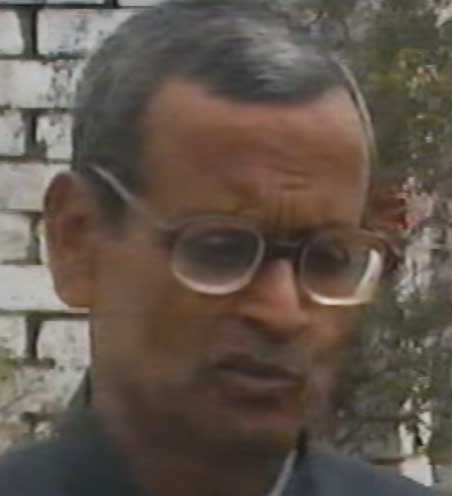
Shiva Tripathi had died only about two months earlier.
Also Read: The hostel built for tribal girls has failed to support the students it was meant to help
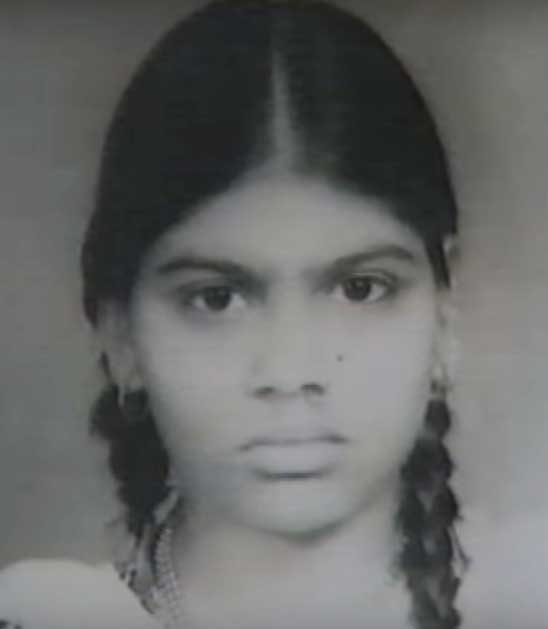
She had lived in the Etawah area, at a considerable distance from Sumitra’s home, and her life appeared very different from Sumitra’s. Shiva belonged to a Brahmin family and had received a much higher level of education. Her father, Ram Siya Tripathi, was a college lecturer, and Shiva herself had completed a B.A. degree. She had married Chhedi Lal of Dibiyapur and had two young children, known within the family as Tinku and Rinku. Her married life, however, had reportedly become increasingly troubled. There had been conflict between Shiva and her in-laws, and shortly before her death, she was involved in a serious quarrel over a family wedding. On the evening of May 18, 1985, her maternal uncle by marriage, Brijesh Pathak, visited her and found her upset. Shiva reportedly told him that her mother-in-law and one of her sisters-in-law had beaten her. The following morning, Shiva was found dead on the railway tracks near Phaphoond station. Her in-laws said that she had committed suicide. But from the beginning, people close to Shiva questioned whether that was really what had happened.
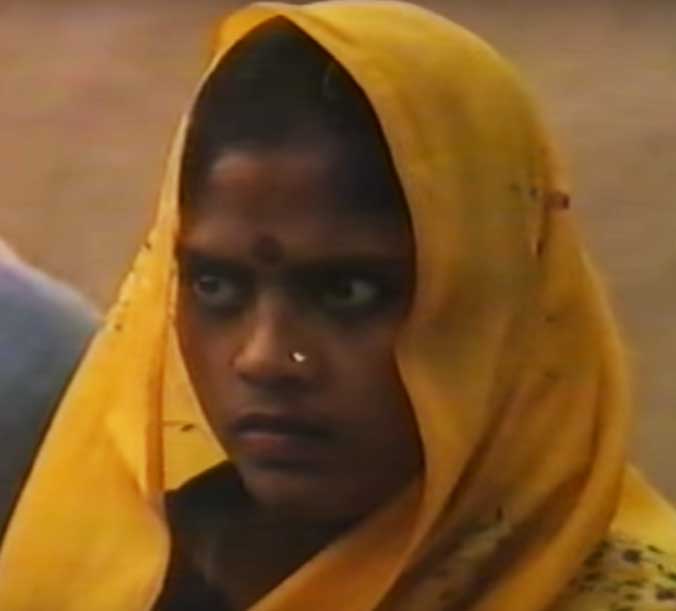
The circumstances surrounding Shiva’s death would later make the connection with Sumitra even more disturbing. Several people who saw Shiva’s body said it was intact and had not been run over by the train. Her uncle had urged the family to wait for Shiva’s father before cremating the body, but the request was ignored. Permission was obtained, the cremation was carried out quickly, and by the time Ram Siya Tripathi arrived, his daughter’s body had already been reduced to ashes. Disturbed by what he had learned, he complained to the police and later accused Shiva’s in-laws of murder. Her husband and father-in-law were arrested and subsequently released for lack of evidence, while other members of the family were also implicated in the allegations. Yet when Ian Stevenson and his colleagues later investigated the case, they refused to turn suspicion into certainty. They concluded that Shiva had died violently after a serious quarrel with her in-laws, but they could not establish whether she had been murdered and placed on the railway tracks or had actually taken her own life. The question of how Shiva died therefore remained unresolved.
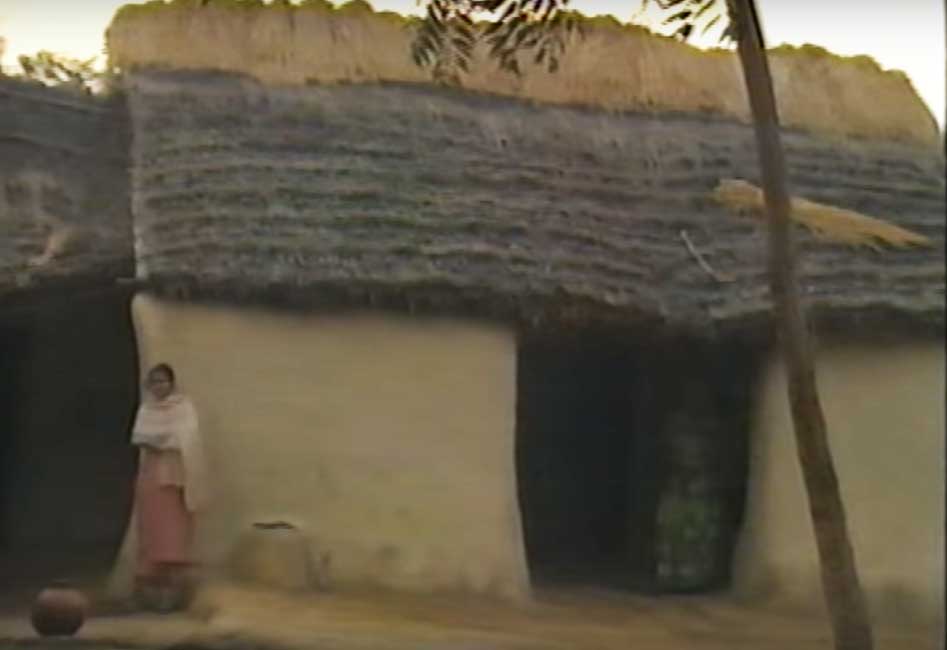
What was known with certainty, however, was that Shiva had died. What happened next was much harder to explain.
For some time, Shiva’s family knew nothing about Sumitra. Sumitra’s own family did not immediately attempt to verify her strange statements either. The two families lived in different communities and, according to the investigation, had no known prior acquaintance. The news eventually began moving from village to village as a rumour. People in a nearby village called Murra heard about Sumitra’s claims, and information gradually travelled toward Dibiyapur. When Shiva’s father, Ram Siya Tripathi, finally heard that a girl in a distant village was supposedly claiming to be his dead daughter, he did not immediately accept the story. In fact, he had never even been to Sharifpura and did not know where the village was. He made inquiries through other people, and the monsoon caused further delays. It was only after the information had been checked indirectly that he finally decided to go himself. On October 20, 1985, exactly three months after Sumitra’s apparent death and revival, Ram Siya Tripathi arrived in Sharifpura. He was about to meet a young woman who claimed to be his dead daughter.
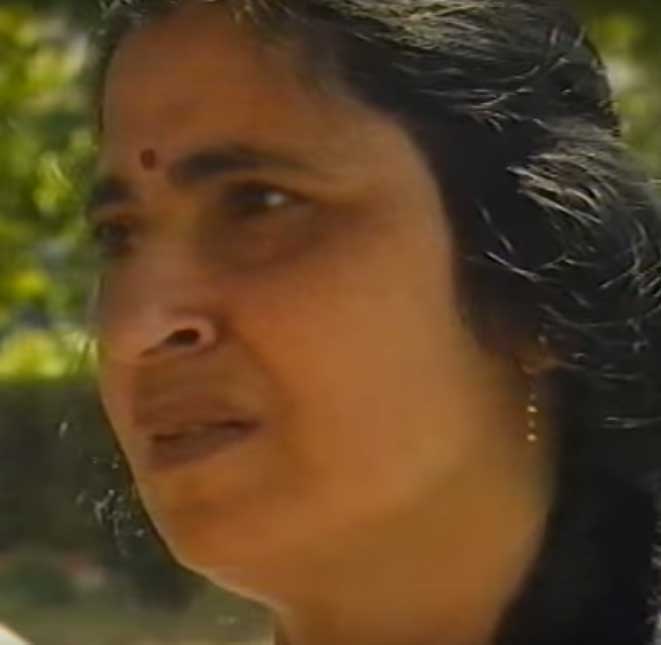
That meeting marked a turning point. When Ram Siya saw Sumitra, she reportedly recognized him as Shiva’s father. She called him “Papa,” the way Shiva had addressed him. She also mentioned names associated with Shiva’s family, including the private name “Shiv Shanker.” One of the names she used had appeared in a newspaper report about Shiva’s death, but “Shiv Shanker” had not. For Ram Siya, the encounter was no longer simply the strange story he had heard while travelling. The woman in front of him seemed to know something about his daughter. The question was no longer whether Sumitra believed she was Shiva. The question was how she could know details belonging to a dead woman and her family in the first place.
That question became the central problem of the investigation. The researchers knew that some information about Shiva had appeared in newspapers. Reports of her death and her father’s complaint had circulated in the region. That meant some of the names and facts Sumitra mentioned could not automatically be treated as extraordinary. The investigators therefore divided her statements into different categories. Some contained information that had appeared in newspaper accounts and might, in principle, have reached her through ordinary communication. Some statements about the final quarrel remained unverified and could not be confirmed as fact. But there was a third group, and this was where the case became much more difficult. The researchers identified nineteen statements involving private details that, in their assessment, had not appeared in the newspaper reports they had examined. These included the name of a private nickname, the names of educational institutions Shiva had attended, the pet names of her two children, the names of relatives, and details concerning personal belongings such as a particular yellow sari and a watch kept in a box in the Tripathi home.
But knowing names on a list is one thing. Recognizing real people is another.
As the contact between the two families increased, Sumitra began meeting people who had known Shiva. The researchers understood that this part of the case could easily be compromised. A person being tested for recognition can be unconsciously guided by a glance, a question, a gesture, or even the direction in which someone looks. So the investigators paid particular attention to recognitions they believed were spontaneous or occurred without obvious cueing. They ultimately identified twelve members of Shiva’s family and circle of friends whom they considered significant in this respect, although they also acknowledged that not every recognition was equally strong. The distinction mattered. The researchers were not simply collecting every successful guess and calling it proof. They were trying to determine whether any recognitions had occurred under conditions that made ordinary explanation difficult.
One encounter involved Shiva’s mother, Ram Rani. When Sumitra first visited the Tripathi home, Ram Siya reportedly tried to mislead her by saying that Shiva’s mother was standing among a group of women outside. In reality, Ram Rani was inside the house. Sumitra reportedly insisted that her mother was not among the women and then went into the house searching for her. She found Ram Rani and embraced her in tears. It was a powerful scene, but the researchers were careful not to treat it as perfect evidence. Ram Siya had already shown Sumitra a photograph of Ram Rani, which meant that she had at least seen her face before. The recognition was therefore interesting, but not entirely independent of prior exposure. That caution would become a recurring feature of the investigation.
Other recognitions were harder to dismiss. Ram Naresh, one of Shiva’s maternal uncles, presented himself to Sumitra and asked who he was. She identified him as her mother’s brother. When he asked which one, she reportedly answered, “Ram Naresh of Kanpur,” referring to a place where he had formerly lived. In another encounter, Ram Prakash Dixit, another of Shiva’s maternal uncles, visited Sumitra after growing a beard. Shiva had never seen him with one. Sumitra reportedly recognized him as Shiva’s maternal uncle, although she could not initially provide his name. When he spoke, she reportedly recognized his voice and then identified him by name. The scenes were striking because the people standing before her did not necessarily look exactly as they had when Shiva was alive.
Then came another encounter, this time with Krishna Devi Dube, a friend of Shiva’s youth. More than eight years before Shiva’s death, the two women had known each other. Krishna Devi had later married and moved to Sikandarpur and had not seen Shiva for years. When Sumitra encountered her, she reportedly addressed her as “Jiji,” the familiar term Shiva had used for Krishna Devi. She also expressed surprise at seeing her there and reportedly said that she had died and had come into a Thakur family and was helpless. The encounter raised another difficult question. If Sumitra had somehow acquired information from a newspaper, how could a newspaper account explain a form of address and a personal relationship that had belonged to Shiva years earlier? Yet even here, the researchers were careful. They did not claim that every detail of the encounter proved anything supernatural. They recorded it as part of a larger pattern that needed explanation.
Photographs provided another layer to the story. When Ram Siya first met Sumitra, he brought an album containing photographs of his family. One photograph had been taken in 1967, about eighteen years earlier. Sumitra reportedly identified all six people in it: Ram Siya, his wife, his mother, his daughter Uma, his son Raman, and Shiva. When she reached the photograph of Shiva, she reportedly said, “This is me.” In another photograph, she identified and named the Tripathi children. In yet another, she identified Shiva’s mother, her brother Raman, and a maternal aunt. When she saw a photograph of Shiva’s young son Tinku, she reportedly began to cry and asked where Tinku and Rinku were. When a photograph of Shiva’s sister-in-law Rama Kanti was shown to her, she reportedly identified her and associated her with the alleged incident in which she had been struck with a brick.
The researchers then tried to determine just how impressive those recognitions actually were. Excluding repeated appearances of the same person, Sumitra was reportedly asked to identify seventeen people in the photographs. She identified twelve without hesitation, identified three more after some hesitation, and failed to recognize two. But there was a complication. Ram Siya had shown her the photographs before some of the later encounters, and he had told her afterward that she had recognized the people correctly. The investigators believed that he might even have communicated approval nonverbally. That meant Sumitra had an advantage when she later met some of those people in person. Yet the researchers also recorded something they considered more significant: she recognized and identified eight members of Shiva’s family or social circle whose photographs she had not previously seen. In total, the investigation credited her with recognizing twenty-three of Shiva’s relatives and acquaintances, either in person or through photographs.
Then there was the change in Sumitra herself.
Before the July 1985 episode, she had been described as a young rural woman with little formal education. Afterward, relatives and investigators noticed changes in the way she dressed, behaved, interacted with people, and used language. She reportedly became more formal in her manner and began behaving in ways that people around her associated with an educated, higher-caste woman. Her reading and writing also improved markedly. Researchers observed her reading and writing Hindi with much greater fluency than her family had previously known. Instead of writing only occasionally, she began writing letters and postcards to the Tripathi family. Her change was therefore not limited to what she said about Shiva. People around her believed that aspects of Shiva’s personality and habits had become visible in her everyday life.
The shift in literacy was especially interesting because it involved something that could be observed rather than merely reported. Researchers did not rely only on family members saying that Sumitra had improved. They themselves observed her reading and writing. At the same time, they were careful about what exactly had changed. Her basic ability to read and write had existed before, albeit at a very limited level. What changed, according to the report, was her fluency, her interest in writing, and the frequency with which she used those abilities. That distinction mattered because it prevented the investigation from turning a gradual improvement into a claim that she had suddenly acquired the complete educational abilities of another person.
The deeper the investigators went, the less simple the story became. Could this have been fraud? Could Sumitra have been coached? Could someone from Shiva’s family have secretly passed information to her? Could she have learned details from newspapers, travellers, traders, or people who moved between the communities? Could she have heard information earlier and later forgotten the source, only to reproduce it under a different identity? The researchers considered these possibilities because extraordinary claims can be investigated only by first asking whether ordinary explanations are enough.
They also examined the possibility of what psychologists might call a secondary personality. Perhaps Sumitra had developed a radically altered state of identity. Perhaps this new personality had somehow collected information that the normal Sumitra did not consciously remember. But that possibility created another problem. Even if a secondary personality could explain the sudden change in behavior, it did not by itself explain where the specific private information about Shiva came from. The researchers noted that most secondary personalities do not demonstrate this kind of claimed paranormal knowledge, although a few historical cases had been reported.
Another possibility was what is known as cryptomnesia, or source amnesia. Under this explanation, a person may encounter information, forget where it came from, and later remember the information while believing that it is original or directly experienced. In principle, that could explain why someone might produce accurate information without consciously remembering having learned it. But the investigators believed that this explanation struggled to account for the full combination of private details, personal recognitions, and behavioral changes they had documented.
There was also the possibility of deception. Yet the researchers argued that a deliberate hoax would require answering another uncomfortable question: who would have carried it out, and how would the necessary information have been collected and delivered to Sumitra? They considered whether another person, including the local healer Vishwa Nath, might have obtained information about Shiva and coached her. But they believed such a theory still failed to explain the breadth of the information attributed to Sumitra and the number of people she reportedly recognized. Their conclusion was not that fraud was impossible, but that they did not find it sufficient to account for everything they had observed.
By this stage, the case had moved far beyond the original village story. It had become an investigation into memory, identity, personality, communication, and the possibility of knowledge that appeared to have no ordinary source. The researchers continued to examine whether information about Shiva could have travelled naturally between the two communities. They acknowledged that newspapers circulated in the broader region and that there were traders and other links between towns and villages. They therefore considered it safest to assume that some information might have reached Sumitra’s side through ordinary channels. The crucial question was whether those channels could explain not just the public facts of Shiva’s death, but the private details and recognitions that followed. Their answer was that, in their assessment, they could not satisfactorily explain the entire pattern.
And still, the investigators stopped short of declaring that they had proved reincarnation.
They also did not claim to have established that a literal spirit had entered Sumitra’s body.
Instead, they described several competing interpretations and acknowledged the limitations of each. The final discussion considered fraud, cryptomnesia with a secondary personality, a secondary personality with paranormal knowledge, and possession. The researchers wrote that if the other explanations failed to account adequately for the facts, then the dramatic transformation in Sumitra’s personality made a possession-type interpretation worth considering. They added an important qualification: they were not claiming dogmatic certainty that this was the correct interpretation. Nevertheless, they believed that much of the evidence made possession, or a closely related explanation such as reincarnation, the most plausible interpretation available to them.
The case therefore ends not with a solved mystery, but with a question that remains stubbornly open. The researchers could establish that Sumitra had undergone a dramatic change in behavior. They could document the statements she made. They could compare those statements with facts known about Shiva. They could identify which information had appeared in newspapers and which had not. They could examine the circumstances in which Sumitra recognized relatives and friends. They could document the changes in her reading and writing and the way she adopted aspects of the personality associated with Shiva. What they could not establish with certainty was the source of the knowledge itself.
That is where the story becomes unsettling.
A young woman in a village went through repeated episodes of altered consciousness. She predicted her own death. She appeared to die and then revived. Afterward, she rejected her own name, husband, child, and family and claimed the identity of another woman who had died only two months earlier. She then began describing that woman’s life, recognizing people who had known her, and displaying knowledge about parts of her private world. Some of those claims could potentially be explained through ordinary communication. Some remained unverified. But the investigators believed that a significant portion could not be satisfactorily accounted for by the information publicly available to her.
And so the case leaves behind a final, unresolved tension.
Was Sumitra remembering a life she had never lived?
Was a new personality emerging from a mind under extraordinary psychological stress?
Had information reached her through channels that investigators simply could not reconstruct?
Or was she, in some sense that remains impossible to prove, describing the life of Shiva because she believed she had become Shiva?
The investigators never claimed to have solved that mystery completely.
They documented it.
They tested its ordinary explanations.
They challenged their own assumptions.
And after years of investigation, they were left with a case in which the most important question remained the same one that had appeared the moment Sumitra opened her eyes:
If the woman in the room was no longer Sumitra, then who exactly was she?

Related News
- Rights The hostel built for tribal girls has failed to support the students it was meant to help
- Rural India Shaktipith Expressway threatens to fragment farms in Sangli villages
- Agriculture From cotton to millets: Rayagada’s tribal farmers make a switch
- Agriculture With Modi at helm, people needn’t be afraid of Lalu-Nitish: Shah