





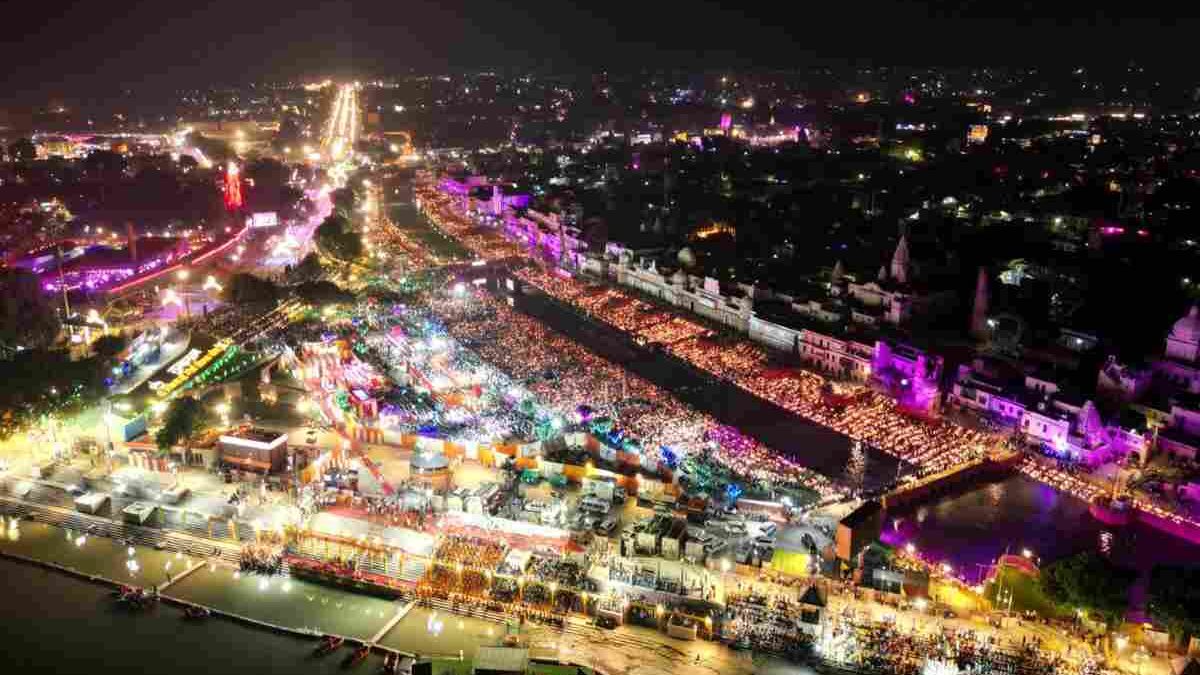
Ayodhya Deepotsav 2026 brought the town completely alive. During the Deepotsav celebrations on the eve of Diwali, thousands of traditional clay lamps lit the shores of the Sarayu River, creating a breathtaking display of lighting in Ayodhya. The city was illuminated by almost 30 lakh diyas, which brought traditions, faith, and heritage altogether and created a joyous mood along the riverbank.
The massive festivities transformed Ayodhya’s ghats into a stunning sea of lighting. One of the main draws of the Diwali celebrations was the arrangement and lighting of the diyas, which included countless helpers and spectators.
Also Read: Instagram’s Shifting Algorithms: Who Chooses What India Views Online?
In Ayodhya, Deepotsav has grown to be a significant yearly event that draws travelers, believers, and guests from all across the nation. The celebration draws focus on India’s traditional custom of observing Diwali with traditional earthen lamps while highlighting the city’s spiritual and cultural importance.
Millions of earthen lamps illuminate the Sarayu Ghats
As hundreds of diyas lit the ghats, the banks of the Sarayu River became the focal point of attention. As darkness descended upon city life, the lamps’ shadows appeared beyond the water, thereby creating a visually stunning image.
Also Read: On November 16, Delhi Metro will begin operations for Chhath Puja at 4:30 AM
The original significance of Diwali is strongly associated with the illumination of diyas. Many people equate the celebration with the triumph of good over evil and light over darkness. Because Ayodhya is historically linked to Lord Rama, the festivities have extra religious meaning.
The display of countless lamps across the riverbank combined communal festivities with sacred traditions. The mood was full with joyful activity and excitement as tourists gathered to see the lit ghats.
The Relationship Between Diwali and Deepotsav and Ayodhya
In the traditional customs of Diwali, Ayodhya has a unique position. The Ramayana states that when Lord Rama, Sita, and Lakshmana returned from their fourteen-year imprisonment, the Ayodhya populace greeted them by lighting candles.
This conventional narrative serves as a catalyst for Deepotsav. To replicate the figurative greeting connected with Lord Rama’s homecoming, hundreds or perhaps millions of clay lanterns are used throughout the ceremony.
The occasion has grown into a significant community event throughout time. It blends customs, cultural events, décor, and community engagement. The fundamental draw of diyas is still their illumination.
An Important Destination for Travelers and Tourists
Ayodhya’s status as an spiritual and historical tourist attraction is further enhanced by the yearly Deepotsav festivities. During Diwali, tourists come to the town to see its shrines, riverside, and festival displays.
Large-scale gatherings for the public might present chances for nearby companies, such as lodging facilities, dining establishments, stores, transportation providers, and merchants offering traditional and conventional products. During the holiday season, a higher number of tourists can boost economic growth.
But these kinds of activities also need careful preparation. Major tasks for the authorities include controlling large numbers of people, keeping the area tidy, and guaranteeing the security of guests. Ecological management has become particularly crucial because of the many millions of clay lanterns that are used and disposed of.
The Significance of Earthen Lamps in Culture
The usage of diyas is a significant aspect of India’s heritage of culture, regardless of the scope of the occasion. During Diwali, standard earthen lamps are typically lit in residences, shrines, and common areas.
The lights are connected compared to conventional handicraft and are often created by pottery makers utilizing clay. Additionally, their usage throughout significant events highlights the value of promoting historical professions and artists from the area.
Even if electric ornamentation and contemporary lighting are becoming more prevalent, numerous individuals still find historical and sentimental value in the appearance of conventional earthen lanterns.
Deepotsav in Ayodhya Unites Celebration and Tradition
Ayodhya became a key hub for Diwali festivities as the Sarayu ghats were illuminated with almost 30 lakh diyas. The occasion demonstrated cultural factors uniqueness of the city and the ongoing significance of customs during community celebrations.
Deepotsav is in excess of just an entertaining show. It combines historical handicraft, tourist attractions, spiritual principles, and involvement in the community. The event serves as a reminder of the historical tales and traditions that remain to influence India’s festivities as thousands of lanterns illuminate the riverside.

Related News
- National On November 16, Delhi Metro will begin operations for Chhath Puja at 4:30 AM
- National 96.47 kg Ganja Seized at Assam-Arunachal Border, Vehicle Driver Absconds
- National CBSE Date Sheet 2027: Will the Board Modify the Dates of the Five Class 12 Exams Set for Holi?
- National Namibian Student Dies After Being Struck by a Train in Noida