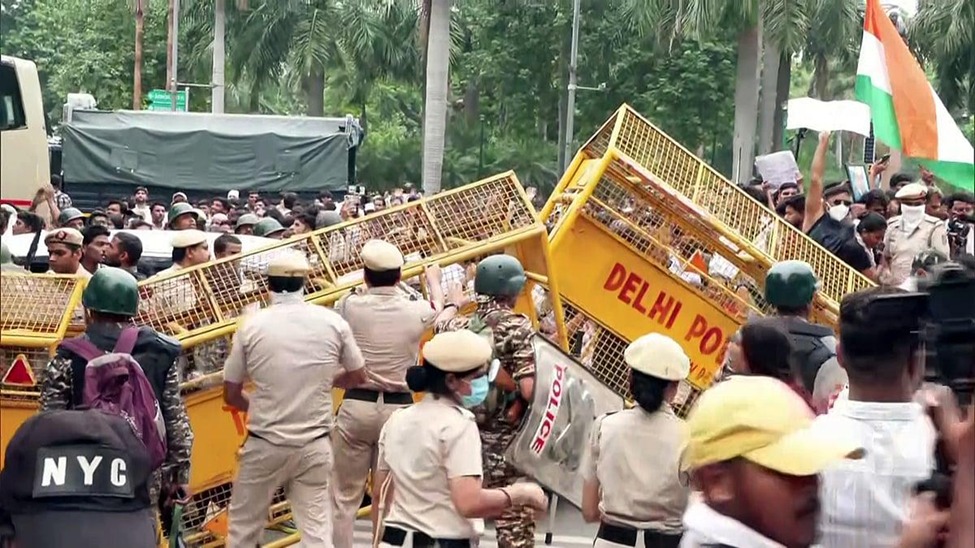






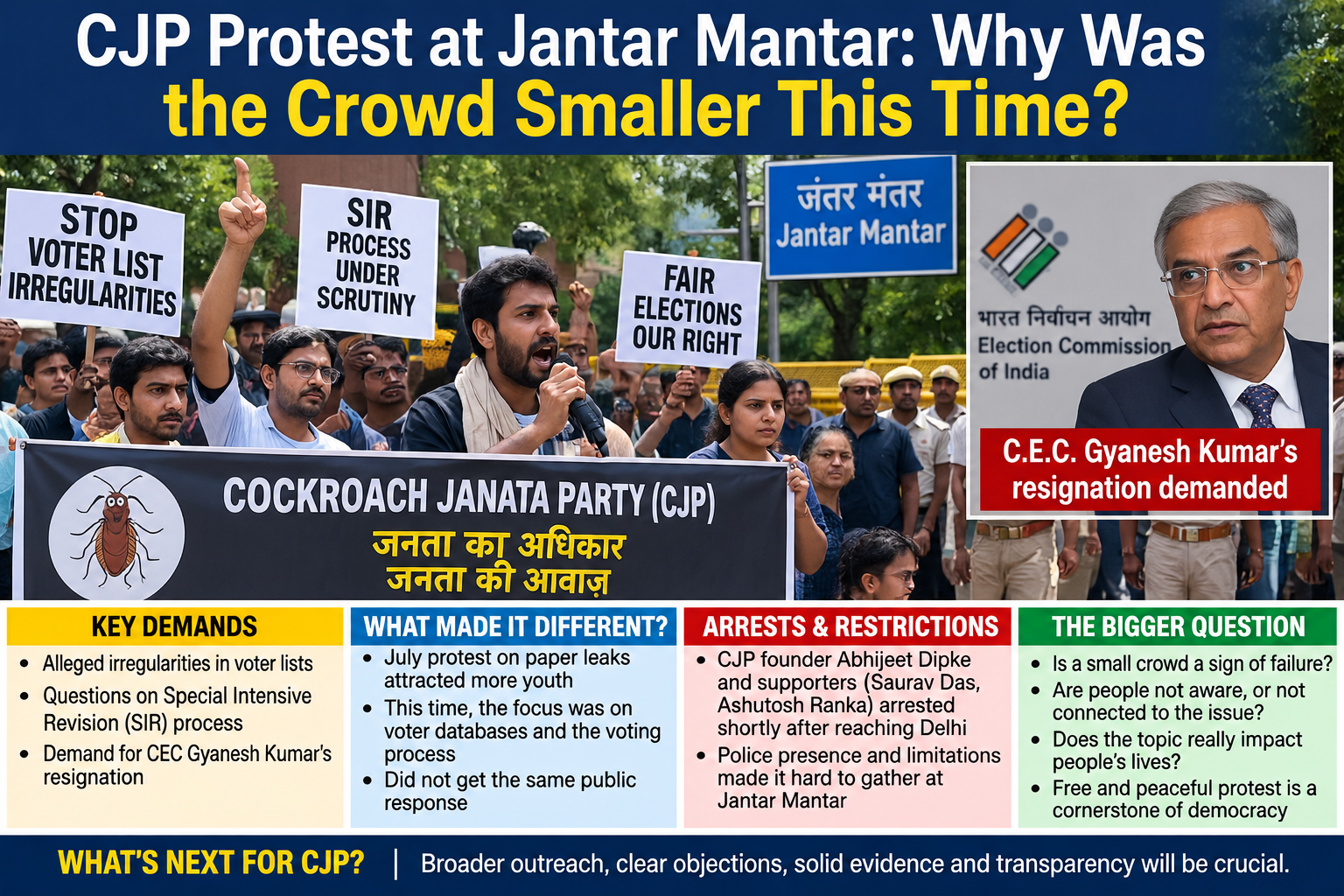
Creating chants and assembling individuals in one location are simply two aspects of a demonstration. It also involves educating individuals about a problem and inspiring people to unite for a cause. A significant question is raised by the Cockroach Janata Party’s (CJP) latest protest in Delhi’s Jantar Mantar: why did the organization find it difficult to mobilize a significant crowd of people this time?
Chief Election Commissioner Gyanesh Kumar’s resignation was demanded in a rally organized by the CJP on October 10. Complaints regarding purported anomalies in voter lists and the Special Intensive Revision (SIR) procedure were voiced by the party in question. These issues have to do with the preparation and revision of standardized electoral rolls. However, as opposed to being regarded as solid proof, the accusations must be investigated via proof and governmental replies.
Also Read: On November 16, Delhi Metro will begin operations for Chhath Puja at 4:30 AM
What Set This Protest Apart from July’s?
When CJP protested regarding paper leaks in July, it attracted attention from the public. Youth can be immediately impacted by problems pertaining to exams, their educational prospects, and job opportunities, which makes it simpler for them to connect to them personally.
This time, the group made an effort to unite citizens around voter databases and the voting process. The uprising did not seem to get the equivalent amount of popularity as the previous event, despite the fact that these concerns are crucial for freedom.
Also Read: 96.47 kg Ganja Seized at Assam-Arunachal Border, Vehicle Driver Absconds
This discrepancy poses a crucial query. Does the mere fact that a topic is relevant to politics necessarily draw a sizable audience? It’s sometimes not the case. Public involvement is often dependent on how well people comprehend a problem, how it directly influences their quality of life, and how deeply they identify with the reason for it.
Leaders Arrested Prior to the Protest
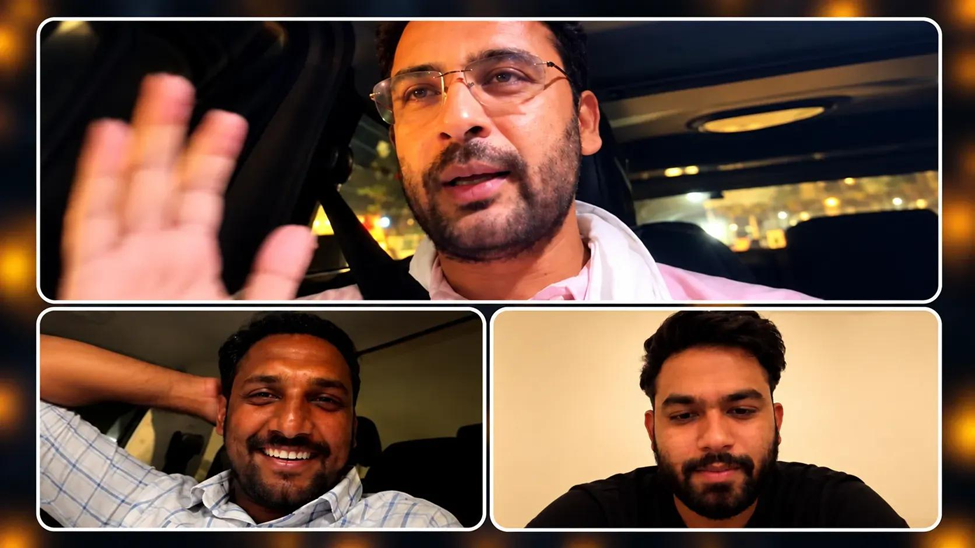
Police activity also caused problems for the protest. According to reports, shortly after reaching Delhi, CJP founder Abhijeet Dipke and other supporters of the party, such as Saurav Das and Ashutosh Ranka, were arrested. It was also challenging for additional followers to get to the picket location.
The demonstrators found it more difficult to assemble in Jantar Mantar due to the limitations and strong law enforcement presence. Although the party made an effort to carry on its demonstrations, the number of people did not match that of its July protest.
When considering the participation rate, these trends are significant. A tiny gathering can indicate an absence of community sympathy, but the circumstances surrounding a demonstration must also be taken into account. The number of participants may be impacted by delays and limitations.
Is a Small Crowd a Sign of a Failed Movement?
Fewer people participating in a demonstration does not necessarily indicate that the topic is no longer important. However, voicing serious worries cannot guarantee that each claim put forward by a demonstration organization is true.
The CJP’s queries must be investigated in light of the information at hand and the answers provided by the appropriate governing bodies. Another crucial aspect of democracy is the freedom to peacefully demonstrate. While government officials must follow the law, citizens are expected to be able to voice their worries.
The circumstance also calls into doubt public involvement. It is also impossible to assess the amount of backing the problem may have gained under alternative conditions when people experience trouble getting to a demonstration venue.
What Does CJP Have in Store?
The problem for CJP now is to reach a wider demographic with its content. The party has to explicitly state its objections, offer proof to back up its assertions, and demonstrate to the public what it expects to accomplish with its election.
Even if the Jantar Mantar demonstration failed to attract the anticipated number of participants, the event’s concerns remain unresolved. The CJP’s ability to expand public support while carrying out its advertising effort in an orderly and transparent manner determines what counts next.
Ultimately, a movement’s overall power cannot be determined solely by the total number of participants on a single day. The inquiries it poses, the supporting data for its assertions, and its capacity to maintain audience interest will determine its impact over time.

Related News
- National On November 16, Delhi Metro will begin operations for Chhath Puja at 4:30 AM
- National 96.47 kg Ganja Seized at Assam-Arunachal Border, Vehicle Driver Absconds
- National On Diwali Eve, Ayodhya lights up the Sarayu Ghats with 30 lakh diyas as Deepotsav festivities get underway
- National CBSE Date Sheet 2027: Will the Board Modify the Dates of the Five Class 12 Exams Set for Holi?