





Jharkhand is currently traversing a new phase of development. While the state is advancing towards strengthening institutional reforms, transparent administration, and good governance, it is simultaneously crafting a new blueprint for an economy driven by Artificial Intelligence (AI), digital governance, modern education, tourism, investment, and innovation through its ‘Vision 2050’ initiative.
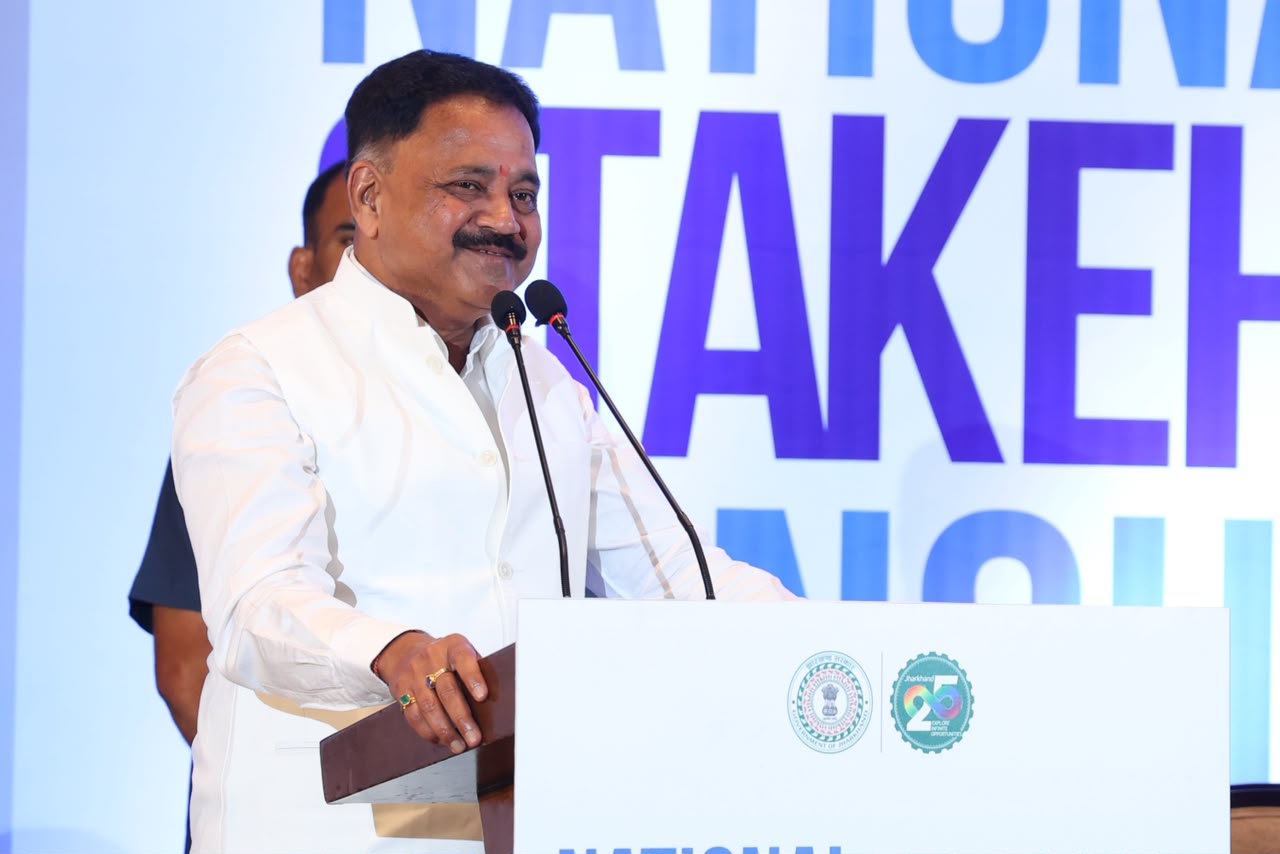
Under the leadership of Chief Minister Hemant Soren, the ‘National Stakeholders Consultation- 2026‘ held in Delhi in Julysignaled a shift for Jharkhand. It moved the state beyond its identity as merely a region rich in mineral wealth, steering it instead towards knowledge, research, and technology, guided by the philosophy of “Mines to Minds.”
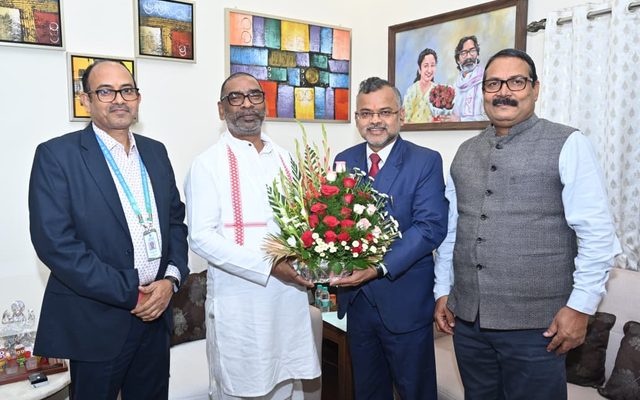
At the heart of these initiatives is Sudivya Kumar, a Cabinet Minister in the Jharkhand government, who oversees the departments of Urban Development & Housing; Higher & Technical Education; and Tourism, Art, Culture, Sports & Youth Affairs.
With over three decades of experience spanning organizational politics to policy formulation, Sudivya Kumar believes that the sustainable development of any state is achieved not merely through new schemes, but through robust institutions, policy continuity, and visionary leadership.
Neha Singh from News root engaged in an in-depth conversation with him regarding governance, institutional reforms, education, urban development, tourism, Vision 2050, and the future of Jharkhand. Presented here are the edited excerpts of that conversation.
Also Read: ONTHHPC Crowned Champions of 54th Nehru Junior Hockey Tournament After Three Years
Question. You have traversed a journey from being a grassroots worker to a cabinet minister. What has this experience taught you about governance?
Sudivya Kumar: The experience of viewing governance from the inside is entirely different. As a citizen or an MLA, we often see only the outcomes; however, once you become part of the executive, you realize the complex processes, coordination, and institutional mechanisms that underpin every administrative decision. Good governance is not merely about making quick decisions, but about making decisions that remain effective in the long run.
Question. Why do you consider administrative continuity and institutional reform to be so important?
Also Read: High Court Quashes Government Order to Cancel JSSC-CGL; Relief for 1,932 Candidates
Sudivya Kumar: Governments may change, but institutions must remain robust. If every new administration starts from scratch, the pace of development will be affected. We need to build a system that moves forward by learning from past experiences. Strong institutions are the hallmark of good governance.
Question. In your view, where is the governance system most vulnerable?
Sudivya Kumar: Two factors are paramount: the lack of institutional memory and weak accountability. If systematic records of past decisions are not preserved, every new administration is forced to start virtually from scratch. This results in a waste of both time and resources. Therefore, preserving institutional memory and strengthening accountability are fundamental requirements for good governance.
Question. What is your top priority regarding the Department of Higher and Technical Education?
Sudivya Kumar: Our priority is to develop an education system that equips students not merely with degrees, but with the knowledge and skills aligned with the future economy. Initiatives such as the State Universities Act, the University Service Commission, and the University Tribunal are part of the institutional reforms aimed at achieving this. We strive to ensure that the youth of Jharkhand are not compelled to leave the state in search of quality education.
Question. What changes will result from reforms like the State Universities Act, the University Service Commission, and the University Tribunal?
Sudivya Kumar: Our objective is to make the higher education system more transparent, accountable, and high-quality. These reforms will enhance transparency in recruitment, strengthen administrative processes, and foster a better academic environment within universities. Only when institutions are strong can the future of the state be secure.
Question. You also hold the portfolio for the Urban Development and Housing Department. What are your priorities amidst rapid urbanization?
Sudivya Kumar: Jharkhand is rapidly urbanizing. In this context, our priority is not merely to expand cities but to make them well-planned, clean, technology-enabled, and citizen-centric. We are working on digital monitoring in urban bodies, QR code and RFID-based door-to-door waste collection systems, housing regularization, revisions to the Floor Area Ratio (FAR), and strengthening infrastructure. Our goal is to develop cities that meet future needs and offer citizens a superior quality of life.
Question. How do you view the National Stakeholders Consultation- 2026 held in New Delhi?
Sudivya Kumar: It was not merely a conference but a crucial platform for charting the future development trajectory of Jharkhand. Policymakers, the industry, global technology companies, academicians, and experts from various sectors came together to deliberate on the state’s ‘Vision 2050’. Such dialogue is essential for formulating better policies, attracting investment, and preparing the state to meet future challenges.
Question. Chief Minister Hemant Soren presented the “Mines to Minds” vision. How do you view this?
Sudivya Kumar: This is a guiding vision for Jharkhand’s future. Our state is rich in natural resources, but now we must also accord equal importance to our intellectual capacity, research, innovation, and the talent of our youth. If we place knowledge, education, and technology at the core of development, Jharkhand will establish a national identity not merely for its mineral wealth, but also for its human resources and innovation.
“Jharkhand will be defined not only by its mines but also by its minds.”
Question. Vision 2050 places special emphasis on Artificial Intelligence (AI), digital governance, and new technologies. What roles will your departments play in this regard?
Sudivya Kumar: Technology is no longer just the future; it is a necessity of the present. The Department of Higher and Technical Education will prepare the youth for future technologies. The Urban Development Department will make technology-driven citizen services more transparent and effective, while the Tourism Department will strengthen Jharkhand’s global identity through digital platforms and modern technology. Our endeavor is to ensure that the benefits of technology reach the last person in the queue and that governance becomes more accountable and citizen-centric.
Question. During the National Stakeholders Consultation, dialogues were held with several global technology companies, including Google, Microsoft, and IBM. How significant do you consider this for Jharkhand?
Sudivya Kumar: The primary objective of the National Stakeholders Consultation was to establish a meaningful dialogue among the government, the industry, and global technology institutions. Discussions with Google, Microsoft, IBM, and other leading institutions made it clear that Jharkhand holds immense potential for technology-driven development. If strong coordination is established among education, skill development, digital governance, and industry, the state’s youth, administration, and investment climate will directly benefit. We aim to make Jharkhand a state that is fully prepared for the future technology-driven economy.
Question. If Jharkhand is moving towards an AI-based economy, what role will universities and technical institutions play?
Sudivya Kumar: The success of any technological transformation depends on its human resources. If we are to advance in AI, digital governance, and new technologies, our universities and technical institutions must also be geared towards that direction. Special emphasis must be placed on skill development, research, innovation, and quality technical education aligned with industry requirements. Our goal is to ensure that the youth of Jharkhand are fully prepared for the economy of the future.
Question. What is the Tourism Department’s top priority?
Sudivya Kumar: Jharkhand’s greatest strengths lie in its natural beauty, tribal culture, religious heritage, and historical legacy. Our priority is to link tourism with the local economy, employment, and investment. We aim to establish Jharkhand as one of the country’s leading tourism states by developing sectors such as eco-tourism, religious tourism, community-based tourism, adventure tourism, and mining tourism.
Jharkhand is one of the safest and most attractive states in the country for monsoon tourism. Generally, the state does not face widespread disasters like floods, nor does it suffer from landslide issues. During the monsoon, all the state’s major waterfalls, rivers, and dams fill to the brim, significantly enhancing their natural beauty. Lush green forests, hills, and captivating natural landscapes offer a wonderful experience for tourists. Therefore, Jharkhand can be promoted as a safe, natural, and memorable tourism destination during the monsoon season.
Question. You mentioned that Jharkhand should be known not just for its mineral wealth but also for its natural beauty. What is the vision behind this idea?
Sudivya Kumar: Nature has endowed Jharkhand not only with abundant mineral wealth but also with extraordinary natural beauty. Dense forests, waterfalls, hills, tribal culture, and spiritual heritage are our invaluable assets. Our objective is for the country and the world to recognize Jharkhand for these attributes as well. Tourism is not merely a means of travel; it is also a vehicle for the state’s identity and local development.
Question. How significant is the concept of mining tourism for Jharkhand?
Sudivya Kumar: Mining has shaped Jharkhand’s economy and identity. Through mining tourism, we aim to present our industrial heritage from a fresh perspective. This will enable people to understand modern mining technology, engineering, environmental management, and industrial development. It has the potential to become a unique identity for Jharkhand and create new opportunities for tourism.
Question. The government is placing special emphasis on the homestay policy. How do you view its connection to employment and the rural economy?
Sudivya Kumar: We believe that the true benefits of tourism should reach the local community. While a five-star hotel might employ around 200 people, 100 homestays can provide livelihoods to approximately 500 people. This means tourism will not be confined to the hotel industry alone but will extend to villages, local families, women, youth, handicrafts, traditional cuisine, and folk culture. The objective of our proposed homestay policy is to transform tourism into a model of public participation, ensuring that the fruits of development reach the last person in society.
Question. Special emphasis was also placed on investment and new partnerships in the tourism sector during the National Stakeholders Consultation. How do you view this?
Sudivya Kumar: Jharkhand holds immense tourism potential, and the time has come to develop it in an organized and planned manner. Positive discussions regarding tourism infrastructure, digital promotion, investment, and partnerships took place during the stakeholders’ consultation. We aim to foster a collaboration between the private sector, local communities, and the government to create a tourism ecosystem that generates employment, strengthens the local economy, and establishes Jharkhand as a premier tourism destination in the country.
Question. How do you view the positive atmosphere regarding tourism and investment that emerged during the National Stakeholders Consultation?
Sudivya Kumar: It is a sign of growing confidence in Jharkhand. When the government, industry, investors, and experts from various fields sit together to discuss the state’s future, it leads to better policies and strengthens the investment climate. In the tourism sector too, our endeavor is to establish Jharkhand as an attractive and investment-friendly destination at both national and international levels.
Question. What are your expectations from the youth of Jharkhand?
Sudivya Kumar: Our youth are Jharkhand’s greatest strength. I urge them to embrace new technologies, continuously hone their skills, and move forward with an innovative mindset. While the government is committed to providing opportunities, the responsibility of transforming those opportunities into achievements lies with the youth as well.
Question. What is your vision for Jharkhand in the year 2050?
Sudivya Kumar: I envision a Jharkhand that ranks among the country’s leading states in areas such as good governance, education, technology, tourism, culture, and investment. It should be a state where the youth do not have to leave in search of better education and employment; instead, people from across the country and the world should come to Jharkhand seeking opportunities. Our goal is to ensure inclusive, sustainable, and future-ready development.
Question. Finally, if you had to describe the future direction of Jharkhand in a single sentence, what would you say?
Sudivya Kumar: Our goal is to build a Jharkhand where strong institutions, quality education, modern technology, inclusive growth, and public participation combine to create new opportunities for future generations- this is the essence of Vision 2050 and our resolve for development.
Sudivya Kumar’s administrative vision makes it clear that he does not view development merely as a matter of schemes and announcements; rather, he sees it as an ongoing process driven by robust institutions, policy continuity, and visionary governance.
While leading key departments such as Urban Development & Housing, Higher & Technical Education, and Tourism, Art, Culture, Sports & Youth Affairs- his priority is not just to address immediate challenges but to prepare Jharkhand for future needs. This mindset is reflected in initiatives spanning administrative reforms, modern education, technology-driven urban development, tourism expansion, and institutional strengthening.
The ‘National Stakeholders Consultation- 2026’ further broadened the scope of this vision. Themes such as Vision 2050, “Mines to Minds,” Artificial Intelligence (AI), digital governance, a knowledge-based economy, and investment-led growth have emerged as key pillars of Jharkhand’s new development journey. Sudivya Kumar’s departments are playing a pivotal role in translating these goals into reality.
He believes that if robust institutions, quality education, modern technology, tourism, investment, and public participation advance in tandem, Jharkhand can establish a new identity in the country- not merely for its natural resources, but as a hub of knowledge, innovation, good governance, and inclusive growth.
Strong institutions are a state’s greatest strength.

Related News
- Jharkhand ONTHHPC Crowned Champions of 54th Nehru Junior Hockey Tournament After Three Years
- Jharkhand High Court Quashes Government Order to Cancel JSSC-CGL; Relief for 1,932 Candidates
- Jharkhand DPS Ranchi Honours 145 Primary Wing Students for Academic Excellence
- Jharkhand Preservation of the Traditions, Culture, and Identity of the Tribal Community is Essential: Chief Minister Hemant Soren