







For many years, our mobile number served as our WhatsApp identification. It happened to be the number that relatives and close companions utilized to reach us, as well as corporations. But this is gradually evolving. WhatsApp is now introducing usernames, providing individuals a new means to recognize themselves rather than instantly providing their contact information.
Initially, this may appear to be a minor modification. We select a username, the other person looks for it, and then we begin a conversation. But beneath this minor modification lies a far greater question: what will happen when our online persona transforms into something that we can build, manage, and show to other people?
Also Read: Instagram’s Shifting Algorithms: Who Chooses What India Views Online?
A contact number is typically what we get. A username is the name that we select.
This distinction is significant.

A username can be our first name, surname, occupation, hobby, or perhaps a carefully constructed online persona. It is capable of telling individuals about the way we want ourselves to be perceived prior to them learning further regarding us. In this context, WhatsApp is not anymore merely asking for our identities. Additionally, it grants us the power to build one.
Also Read: Jio Offering Free Recharge on Select Plans: How to Claim Buy One Get One Free Deal
This gets particularly fascinating when we consider an additional recent evolution in WhatsApp: subscriptions.
Meta now offers paid subscription packages for its applications in India, which include WhatsApp Plus. The subscription unlocks extra benefits and customization, whereas simple messaging services and phone calls are still free.
On initial glance, spending money for additional amenities may appear unrelated to usernames. However, both advancements provide substantial insights into the shifting connection that exists between consumers and online services.
The username responds to the query: “Who are you here?”
The subscription inquires, “What sort of experience are you inclined to shell out money for?”
They demonstrate how online platforms are increasingly influencing the ways in which we build, manage, and showcase our digital personas.
This is particularly crucial for young individuals.
A learner, a developer, a small-business proprietor, or simply an average online social network user’s online persona is not anymore restricted to a profile photograph and a name. The identical virtual network allows an individual to learn digitally, advertise their creations, interact with their clients, cultivate a community, publicly express their thoughts, and make connections with individuals all over the nation.
Jharkhand is extremely much a component of such transformation.
The state’s youth are increasingly employing social media platforms to promote regional cuisine, traditions, tourism, creativity, music, humor, and daily life. A creator who is based in Ranchi, Jamshedpur, Dhanbad, or any other tiny locale is now able to reach audiences well beyond Jharkhand.
This has opened up new opportunities for local and regional representation.
The concept of visibility has traditionally been associated with geographic location. In a smaller metropolis, it became challenging to connect with a wide audience. A handheld device and internet access are now capable of taking a regional narrative far beyond its original scope.
However, there is another element to this digitized independence.
Being allowed to post a piece does not constitute a guarantee that others will notice it.
Social networking platforms use algorithmic methods to determine what content shows up in front of consumers. Certain content attracts a lot of focus, whereas other pieces go unnoticed. This implies that, within the modern digital age, the ability to communicate and be noticed aren’t always equivalent.
This is where the concept of online personal identity gets crucial in Jharkhand.
The state is additionally making plans for an era dominated by machine learning and digital government. Jharkhand has been talking about AI, internet services, and tech-driven governance initiatives as an element of its future strategy.
However, digital advancement doesn’t only correspond to technological advances.
It also needs to indicate increased digital knowledge.
Individuals need to know what’s happening to the personas they generate on the internet. They want to understand the reason why a certain post connects with hundreds of individuals but another just hardly reaches anyone at all. They have to comprehend what knowledge they are actually sharing, the things they are shelling out for, and the ways that online platforms determine how they interact online.
The username controversy takes us right back to the issue of privacy.
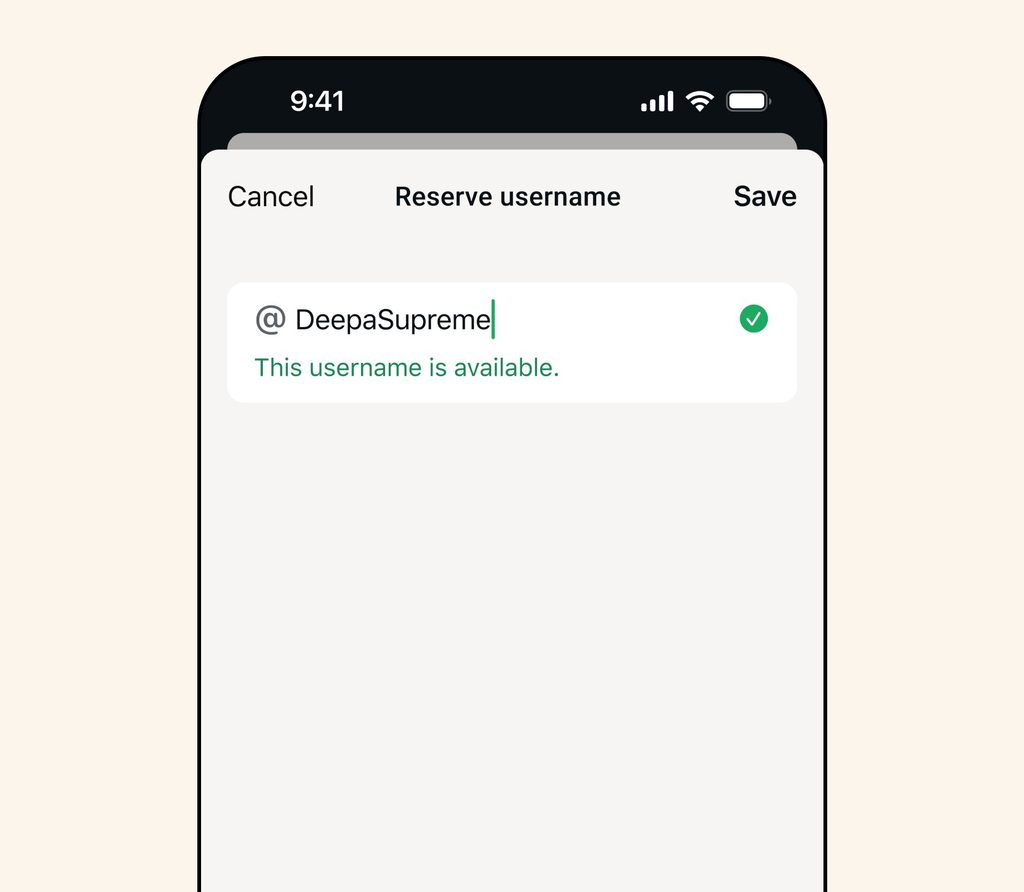
WhatsApp introduces usernames as a method to give individuals greater authority over their telephone numbers. Rather than immediately providing someone unfamiliar a private phone number, an individual can communicate via a username.
That’s undoubtedly useful.
But secretly hiding a phone number is not the same as making oneself invisible.
A username, profile image, a description, status, professional persona, and internet-based activity can all help to provide a comprehensive portrait of a person. We can reveal fewer details in one spot while sharing greater aspects of ourselves in multiple online spaces.
This leads to a privacy paradox.
We want greater anonymity from random individuals, but we are constantly developing virtual identities that boost our visibility.
And this is where organizations like Meta transcend the realm of technological advancement. They build environments where countless numbers of individuals interact, form distinct identities, and go about their everyday activities.
This discussion is growing more and more important to Jharkhand users.
The state is transitioning to a digitally connected era, and its young demographic is already doing a large portion of its personal and professional lives online. The issue is not anymore whether Jharkhand will join the digital marketplace. It already does.
The more important issue is whether or not individuals will get involved with sufficient information to fully comprehend the structures they are currently utilizing.
A username may appear as just a couple of characters on a display. A subscription service may appear to be a regular monthly expense. However, the two constitute a component of a much bigger shift in how technology businesses comprehend their customers.
We are not just individuals who use an application to exchange text messages.
We are establishing personal identities, growing consumers, purchasing online activities, and leaving our footprints across multiple platforms.
That is the reason why the discussion about WhatsApp usernames and subscriptions should extend beyond just the issue of whether or not these functions are beneficial or not.
The more pressing question is: who truly manages our online identity, especially now that we are able to create, oversee, and even contribute money to improve it?
Knowing the answer to that question could prove just as crucial for Jharkhand’s growing digital population as acquiring the skills to utilize the technology itself.