






WhatsApp has turned into an essential component of daily life. People rely on it to communicate with friends, relatives, classmates, and colleagues. It may become a crucial component of teenagers’ social lives. However, as young individuals devote greater amounts of time surfing the internet, questions regarding their privacy and security are becoming increasingly common.
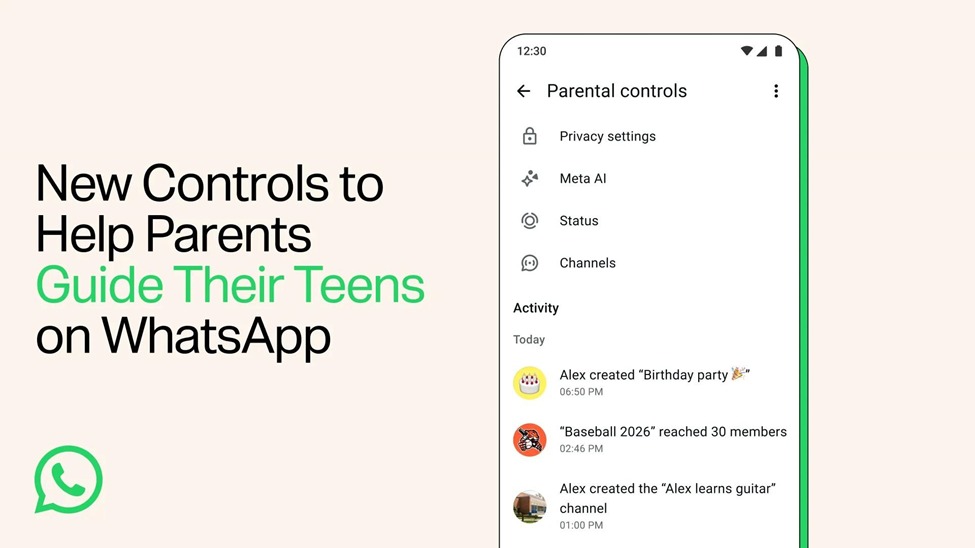
WhatsApp introduced new parental controls on September 30, 2026, in order to help parents to supervise their teenagers’ use of the messaging application. The modifications are intended to give parents more knowledge and control over certain aspects of their teenager’s WhatsApp interaction. The feature is going to be slowly but surely demonstrated to teenagers aged 13 to 17.
Also Read: Samsung Innovation Campus 2026 Launched in UP; 5,000 Youth to Get AI and GenAI Training
What Are The Latest Controls?.
The recently introduced controls enable parents the ability to control various aspects of their teenager’s WhatsApp account. This consists of options for who can add the teenager to groups, determining who can view specific profile details, and the manner in which Status and Channels are utilized.
WhatsApp is additionally offering parents greater power over Meta AI features on teen accounts. These control mechanisms are meant to provide family members with a different approach to guide their teenagers’ interactions with different sections of the platform.
The goal isn’t just to prevent teenagers from using WhatsApp. Rather, the updated features provide parents with tools that allow them to establish a more secure online space, whereas teenagers are free to use the app for communication.
Also Read: WhatsApp Usernames: How Digital Identity Is Changing Privacy, Visibility and Online Life

Image Credits: WhatsApp
Why does this matter?
Teenagers nowadays have been growing up in an environment in which online and offline interaction are inseparable. A discussion that started at school may be continued on WhatsApp. Family gathering plans, university conversations, close relationships, and social events are all capable of taking place over the phone.
Therefore, it makes online security an ongoing concern instead of something that just affects IT professionals.
Parents might want to ensure that their kids communicate securely, whereas teenagers might prefer sufficient privacy to engage in regular conversations with their peers. Keeping the right balance among both of these demands is critical.
Image Credits: Photo by Kindel Media via Pexels
Safety and Privacy.
One of the most frequently asked questions about parental controls is the point at which security ends and personal privacy begins.
Parents have the duty to secure their children, particularly from inappropriate communication, risky communities, and various other online hazards. At the same time, teenagers are becoming more independent. Continuous surveillance can make these individuals feel like they don’t have any private space when they are online.
According to WhatsApp, personal conversations and calls are still encrypted from beginning to end. This indicates that the details of those private discussions aren’t automatically made publicly accessible to the parents via such controls. This difference is crucial. Providing parents authority over specific account preferences differs from providing them with control over all private messages.

Image Credits: Photo by Andrey Matveev via Pexels.
What Does This Mean For Family Members?
The updated controls could also influence how adolescents and parents discuss internet safety. Digital technology can offer security instruments, yet it cannot substitute for personal interaction in families.
Parents might have to clarify the reason why specific limitations are in place rather than just turning them on. Teenagers, in the process, should be taught to recognize the risks associated with exchanging data and interacting with strangers via the internet.
This can transform online security into a collective duty instead of simply a collection of regulations.

Image Credits: Photo by Monstera Production via Pexels
Why Does It Matters in India?
WhatsApp is especially prevalent in daily communication in India. Families and friends utilize it to remain in touch, learners utilize it for educational communication, and groups use it to circulate information and plan events.
Since more and more young individuals rely on online platforms for various aspects of their daily lives, worries regarding security, privacy, and ethical interaction will increase.
For households, the newly introduced WhatsApp control features represent greater than simply an additional application upgrade. They constitute a component of a broader discussion regarding how young individuals should deal with the age of technology.

Image Credits : Photo by Amit Alex via Pexels.
A Minor Transformation, A Bigger Discussion.
The recently introduced WhatsApp controls might appear to be a technological modification, however the underlying concerns are far more serious. What level of freedom should teens have when surfing the internet? What amount of monitoring is needed? And the manner in which can parents safeguard their kids while not totally invading their personal space?
There is unlikely to be a single solution that’s suitable for all families. Technology can offer beneficial tools, but confidence, interaction, and consciousness are just as essential.
As teenagers grow increasingly interconnected via digital mediums, understanding how to keep themselves secure while online will grow just as crucial as understanding the manner in which to interact respectfully offline as well.

Image Credits: George Pak via Pexels.

Related News
- Tech Updates Instagram’s Shifting Algorithms: Who Chooses What India Views Online?
- Tech Updates Jio Offering Free Recharge on Select Plans: How to Claim Buy One Get One Free Deal
- Tech Updates Jio’s ₹10,000 Three-Year Recharge Plan: A Unique Type of Digital Lock-In or Comfort for Customers?
- AI News Claude Heads to India: Why Country-Based AI Analysis is Important