





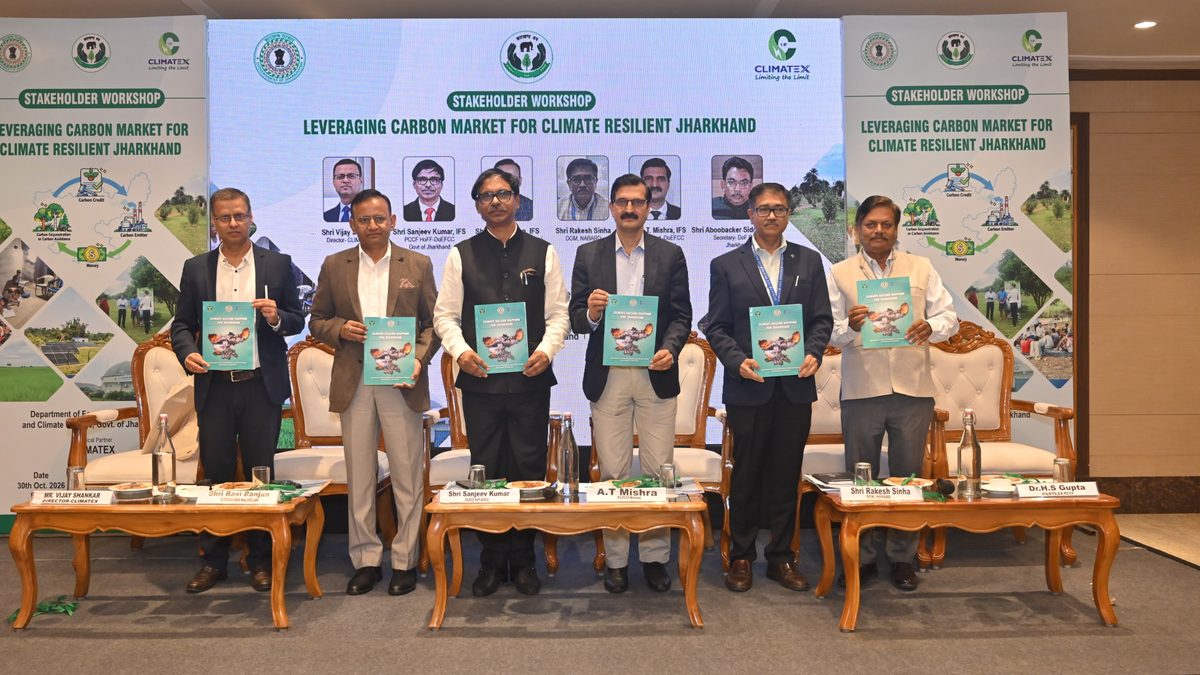
Deliberations on Linking Agroforestry, Land Restoration, and Rural Livelihoods with Carbon Finance; ‘Climate Hazard Mapping for Jharkhand’ Report Released
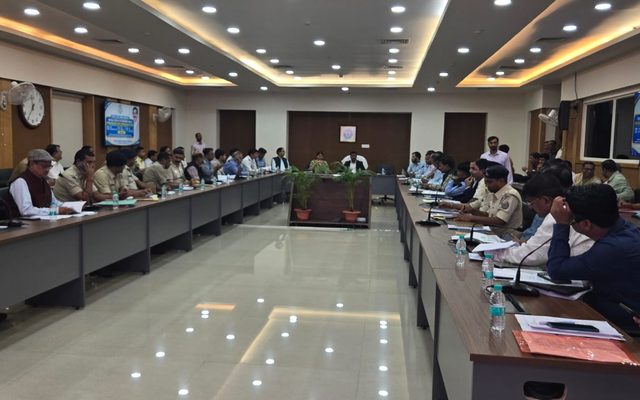
Ranchi: To address the challenges of climate change and strengthen the livelihoods of rural and tribal communities in Jharkhand, the Department of Forests, Environment and Climate Change organized a stakeholder workshop titled ‘Leveraging Carbon Market for a Climate Resilient Jharkhand’ at Hotel Chanakya BNR, Ranchi.
The workshop explored the potential for promoting climate-resilient agriculture, agroforestry, land restoration, and rural development through carbon markets. Participants included representatives from various government departments, financial institutions, climate experts, development organizations, and the private sector.
Also Read: ONTHHPC Crowned Champions of 54th Nehru Junior Hockey Tournament After Three Years
Carbon Trading: A Vital Tool for Environmental Conservation and Livelihoods
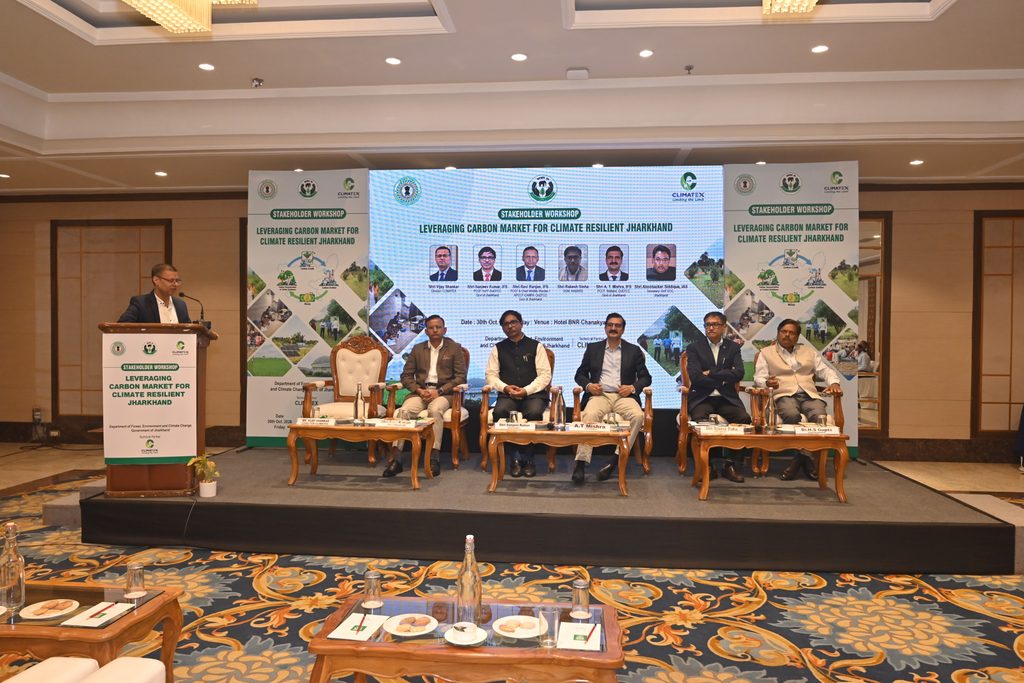
Addressing the workshop, Sanjeev Kumar, Principal Chief Conservator of Forests (PCCF) and Head of Forest Force, described carbon trading as a significant mechanism for environmental conservation and the enhancement of local livelihoods. He emphasized the need for better coordination among all relevant sectors, including industry, mining, and energy.
Citing data from ISRO, he drew attention to the challenge of land degradation, which affects approximately 69 percent of the land in Jharkhand. He also underscored the necessity of promoting initiatives such as water conservation, afforestation, land restoration, and the adoption of biogas.
Ravi Ranjan, Principal Chief Conservator of Forests and Chief Wildlife Warden, stressed the importance of prioritizing community livelihoods and developing carbon projects based on scientific, evidence-based data.
Also Read: High Court Quashes Government Order to Cancel JSSC-CGL; Relief for 1,932 Candidates
Ensuring Carbon Finance Reaches Farmers and Rural Communities
Rakesh Sinha, Deputy General Manager at NABARD, highlighted the potential for channeling carbon finance to farmers and rural communities through NABARD’s existing schemes and financial support mechanisms.
Former Principal Chief Conservator of Forests, Dr. H.S. Gupta** highlighted the importance of the carbon market for environmental conservation and rural livelihoods. Meanwhile, A.T. Mishra, Principal Chief Conservator of Forests (Wetlands), underscored its role in wetland conservation and the enhancement of biodiversity.
Vijay, Director of CLIMATEX, explained that the workshop aimed to explore the potential of carbon finance to promote climate-resilient agriculture, agroforestry, and rural livelihoods within the state.
The welcome address at the event was delivered by Anuradha Mishra, Divisional Forest Officer (DFO).
Scientific Studies and Demonstration of Digital Tools
The workshop presented the findings of a feasibility study conducted by CLIMATEX for the department. Additionally, a digital Measurement, Reporting, and Verification (dMRV) tool—designed to assess biomass and soil carbon stocks using satellite imagery and scientific models—was demonstrated.
On this occasion, a report titled ‘Climate Hazard Mapping for Jharkhand’ was also unveiled. This report is expected to assist in understanding the state’s climate-related challenges and risks, thereby facilitating the development of targeted planning and strategies.
Discussions on Scaling Climate Projects through CSR and Impact Investment
The technical sessions of the workshop covered topics such as linking government schemes with the carbon market, exploring opportunities for blended and philanthropic finance, and scaling climate-resilient projects through Corporate Social Responsibility (CSR) and impact investment.
Participants shared insights on the potential for mobilizing carbon finance—taking into account Jharkhand’s climate vulnerability—through initiatives in agroforestry, land restoration, and rural development. Particular emphasis was placed on strengthening the livelihoods of farmers and tribal communities.
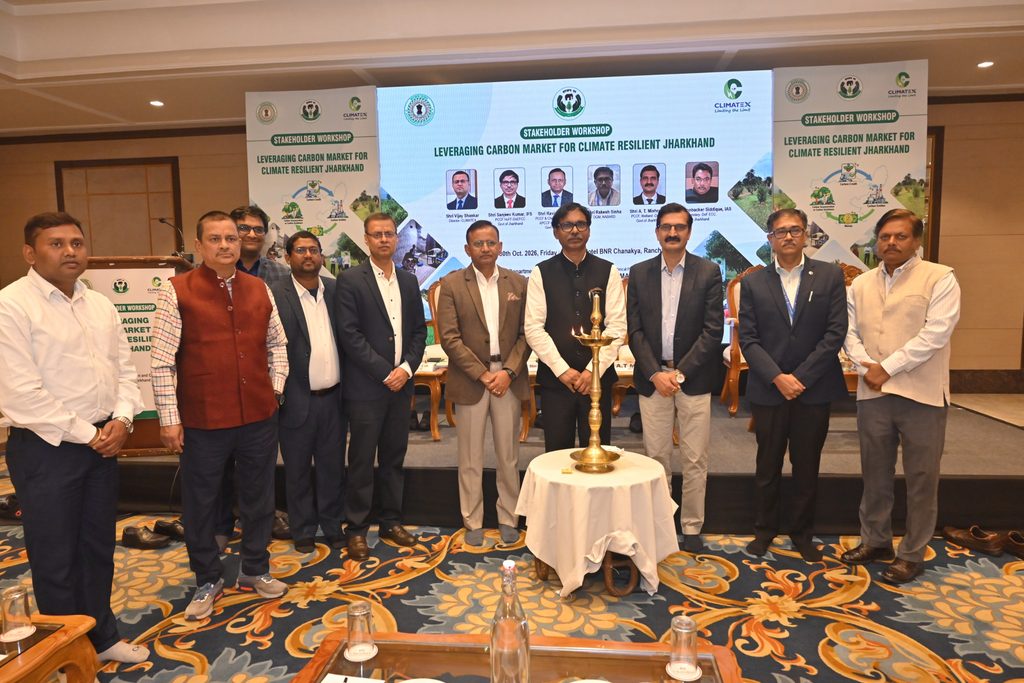
Representatives from Various Organizations Participated
The workshop saw the participation of representatives from various organizations involved in development and climate finance, including NABARD, Birsa Agricultural University, the German development agency (GIZ), the Climate Policy Initiative (CPI), the Jharkhand State Livelihood Promotion Society (JSLPS), PRADAN, Social Alpha, Hindalco, the Syngenta Foundation, and the Axis-XLRI-NABARD Incubation Center.
It was emphasized during the workshop that the effective use of carbon finance could play a crucial role in increasing the incomes of rural and tribal communities, conserving natural resources, and strengthening the state’s capacity to address the impacts of climate change.
Several senior officials from the Department of Forest, Environment and Climate Change were also present at the event.

Related News
- Jharkhand ONTHHPC Crowned Champions of 54th Nehru Junior Hockey Tournament After Three Years
- Jharkhand High Court Quashes Government Order to Cancel JSSC-CGL; Relief for 1,932 Candidates
- Jharkhand DPS Ranchi Honours 145 Primary Wing Students for Academic Excellence
- Jharkhand Preservation of the Traditions, Culture, and Identity of the Tribal Community is Essential: Chief Minister Hemant Soren