
Crossing Boundaries: How India and Nepal Are Getting Stronger with the New Ayodhya–Janakpur Train
Summary
Full Story
India and Nepal have traditionally had an association that goes beyond that of two neighbors. It is based on common customs, convictions regarding faith, familial ties, commerce, and heritage of culture. Another significant section in this association has been provided by a new railroad connection that links Ayodhya, India, with Janakpur Dham, Nepal.
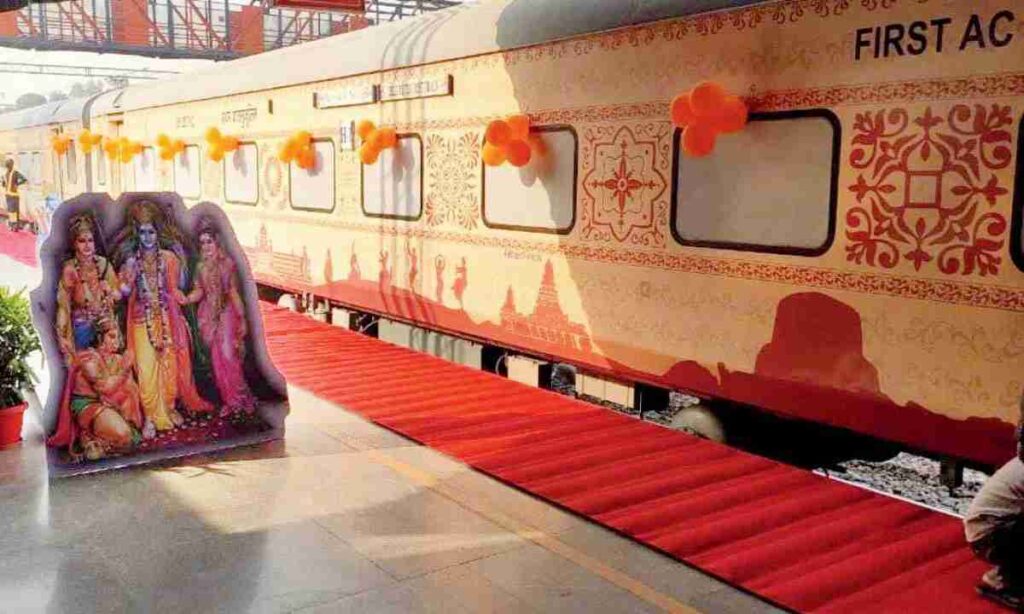
The Saryu-Kamala Express, which connects Ayodhya in Uttar Pradesh with Janakpur Dham in Nepal, was officially launched on November 23, 2026, by Prime Ministers Narendra Modi and Balendra Shah of Nepal. It is projected that the newly established service will facilitate transportation connecting both of these significant spiritual and cultural locations. It also illustrates how transportation systems can improve ties among neighboring nations.
Also Read
On November 16, Delhi Metro will begin operations for Chhath Puja at 4:30 AM
National
96.47 kg Ganja Seized at Assam-Arunachal Border, Vehicle Driver Absconds
National
On Diwali Eve, Ayodhya lights up the Sarayu Ghats with 30 lakh diyas as Deepotsav festivities get underway
National
CBSE Date Sheet 2027: Will the Board Modify the Dates of the Five Class 12 Exams Set for Holi?
National
Namibian Student Dies After Being Struck by a Train in Noida
National
India Creates 11 Crore Farmer IDs Ahead of Deadline Under Digital Agriculture Mission
NationalA New Railroad Link Connecting Two Significant Cities
Between Ayodhya and Janakpur Dham, the Saryu-Kamala Express will go about 604 kilometers. It will typically take about 19 hours to complete the trip. Regular passenger services are set to start on November 28, 2026, and the railway will run once weekly in both directions.
Numerous cities and communities in Uttar Pradesh, Bihar, and Nepal will be connected by the highway. Mankapur, Basti, Gorakhpur, Narkatiaganj, Raxaul, Sitamarhi, Madhubani, and Jaynagar are significant locations.
It is anticipated that religious travelers, travelers in general, and those visiting relatives beyond the boundary will find travelling more comfortable with this railroad connectivity. In the past, travelers frequently had to rely on several modes of transportation to finish their trip. Some of these issues can be solved and an alternative mode of transportation offered by direct railway services.
Why Are Janakpur and Ayodhya Significant?
In South Asian beliefs and cultural customs, Ayodhya and Janakpur are particularly significant.
Ayodhya, a major Hindu religious site in Uttar Pradesh, is popularly linked to Lord Ram. Goddess Sita, sometimes called Janaki, is said to have been born at Janakpur Dham in the Madhesh Province of Nepal.
The Ramayana myth states that Sita was born to King Janak of Mithila and thereafter wed Lord Ram. Using a common cultural and spiritual legacy, this tale unites the two distinct towns.
Community traditions and celebrations also reflect the connection between the two. In Janakpur, people commemorate Vivah Panchami, which honors the union of Ram and Sita, with great excitement. Dedicated individuals and tourists from all across Nepal and India come to celebrate.
The relationship between Ayodhya and Janakpur is more than just tourist attractions to many. It stands for a bond of culture which has persisted over several generations.
How the Train Can Help Local Companies and Tourists
It is likely that the newly established railroad operation will increase travel possibilities in both nations. Visiting significant pilgrimage destinations will be easier for those traveling for reasons related to religion.
The Ram Mandir along with additional architectural and spiritual attractions can be explored by tourists in Ayodhya. One of the greatest prominent attractions in Janakpur is the renowned Janaki Mandir, which is open to travelers. Neighborhood companies can also profit from the rise in tourists.
More business could be generated for lodging facilities, dining establishments, stores, services for transportation, professional tour guides, and regional craftspeople. There may be new opportunities for small enterprises around train terminals and attractions for tourists.
The real advantages, though, will rely on how skillfully the facility is run, how reasonably priced the trip is, and whether the cities in question are ready to accept additional tourists.
Entertaining tourists ought not to constitute the main goal of business. Additionally, it must honor the social and cultural significance of the locations being explored and assist local residents.
Nepal and India: An International Connection
Nepal and India have an extensive background of socioeconomic, cultural, and social relationships. Both nations have tight familial ties, trade in products, and visit the boundary for work, school, medical services, and reasons related to religion.
These ties have been facilitated by both nations’ wide borders. Traditions are often passed down over geographical boundaries, and numerous households have members on both ends.
This bond is further enhanced by the railroad link between Ayodhya and Janakpur. It can promote increased communication across populations and enable individuals to more thoroughly understand one another’s customs.Greater flow of passengers and greater accessibility could also help communities throughout the path.
Beyond a Train: Greater Collaboration Between the Two Nations
When Nepalese Prime Minister Balendra Shah visited India, the railroad connection was introduced. Eight agreements to improve collaboration in various fields were additionally signed by both of the nations at his meeting with Prime Minister Narendra Modi on November 23.
Orbital communication, governmental law enforcement, forensic science, general medical care, conventional and traditional medicine, standardized civil service training, urban sustainability, and animal and fisheries improvement are just a few of the industries covered by these contracts.
Additionally, India pledged a 24,000 crore Nepali rupee cooperation for development plan to aid Nepal’s sustainable development and restoration, especially in the wake of the terrible floods in August 2026.
These advances demonstrate that there are multiple regions of interaction in the connection among India and Nepal. Health services, technological advances, infrastructure, and economic expansion are just as crucial as transportation links.
Obstacles That Must Not Be Ignored
The newly formed railroad service is an important advancement, but its effectiveness will rely on more than simply its launch.
Specific information regarding boarding times, ticketing costs, customs at the border, and various other travel-related needs is necessary for visitors. The service in question ought to continue to be reasonably priced and available to everyone, not just travelers and pilgrimage.
Infrastructure near train terminals and popular destinations for tourists additionally have to be improved. A pleasurable trip depends on a tidy environment, appropriate transportation, lodging, and safety for everyone.
Interaction between the two nations will also be necessary to guarantee the uninterrupted and dependable functioning of international e-commerce railroads.
Most significantly, the population at large, cultural attractions, and natural surroundings shouldn’t be unnecessarily burdened by economic expansion. Even when more people explore heritage attractions, they nevertheless have to be protected.
Increasing Relationships via Communication
A major step in enhancing railroad communication among India and Nepal is the introduction of the Saryu-Kamala Express. It links two distinct towns with deep cultural and spiritual ties.
The newly formed services might facilitate devotion and travel while opening doors for nearby neighborhoods and companies. It also serves as a reminder that infrastructure for transportation can contribute to the blending of civilizations.
Every problem between two nations is unable to be resolved by a railroad. On the other hand, it may present chances for increased communication, comprehension, and collaboration.
How well this project serves regular travelers and helps populations on both ends of the frontier will determine its true impact.The Saryu-Kamala Express has the ability to deepen the long-standing relationship among India and Nepal in addition to linking Ayodhya and Janakpur.
