
The Growth of Quick Commerce in India: How Instant Delivery Is Affecting Our Purchase Behavior
Summary
Full Story
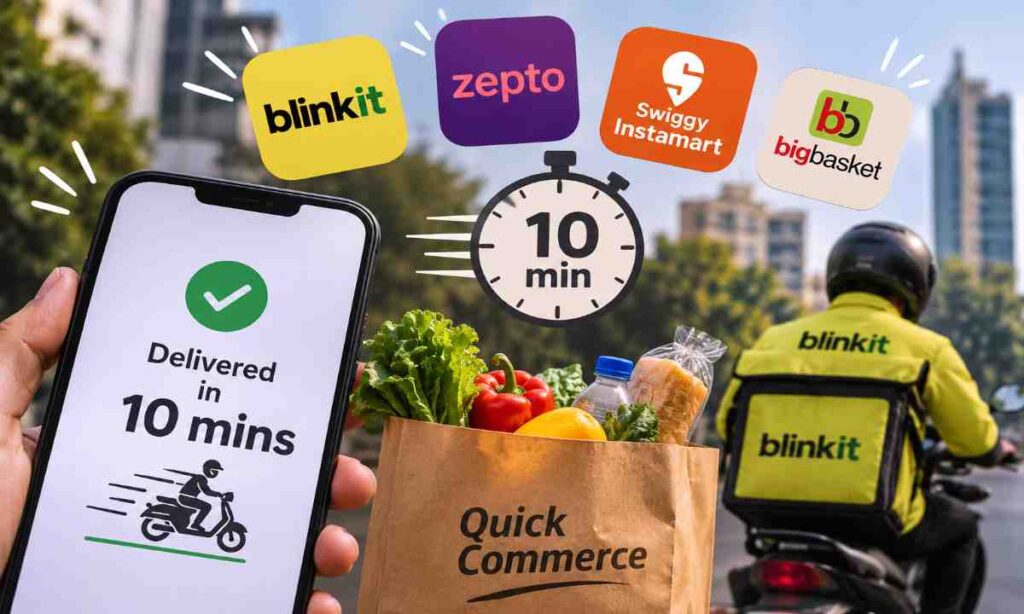
With the rise of e-commerce sites, purchasing basic groceries, food items, and basic household items is getting simpler. Users can shop for commonplace items using standard smartphone apps and have them delivered quickly with firms like Blinkit, Zepto, and Swiggy Instamart. Just a few touches on a mobile device are able to perform what used to involve a trip to a neighboring grocery shop.
India is developing a new retail landscape as a result of this shift, especially in cities. Digital mediums are becoming more and more popular since they are convenient and preserve time. But the rise of rapid commerce additionally raises significant queries about consumer expenditure, delivery service providers, established retailers, and the future prospects of India’s retailing industry.
Also Read

One Night at the Call Center: India’s Worldwide Information Economy’s Unknown Workforce
Business
Sharp Surge in Gold Prices on Dhanteras; Silver Also Becomes Costlier by ₹10,200 per kg
Business
Reduction in Airport Charges and Taxes to Drive Expansion in Indian Aviation Sector: Willie Walsh
Business
Tata Power Signs MoU with BPCL to Develop 110 kV Power Infrastructure for Mumbai Refinery
Jharkhand
BLS Polymers’ Rs 255 crore IPO opens tomorrow; bidding allowed until October 29
Business
Gold Price Today: Gold prices drop by up to ₹820; silver also falls by ₹5,000 per kg
BusinessQuick Commerce: What Is It?
Quick commerce, also referred to as Q-commerce, is an internet-based ordering system that delivers goods quickly. Quick-commerce systems prioritize immediate delivery, in contrast to conventional online shopping, which might require more than one day to hand over goods.
Through smartphone apps, clients may get regular groceries, milk, veggies, snack foods, household supplies, personal grooming items, as well as electronics.
These businesses use “dark stores,” which are tiny transportation and storage facilities. In order to quicken the delivery of goods to consumers, these facilities are situated near residential communities.
Employees get the necessary items from the warehouse, package them, and get them ready for dispatch whenever a consumer makes an order. The order is subsequently delivered to the consumer’s doorstep via a shipping partner.
Many consumers now buy ordinary goods differently as a result of such a system. Scheduling products a few days ahead of time or going to a real store are hardly the only ways to make purchases.
Why Do Indians Prefer Speedy Shipping?
Accessibility is a major factor in the attraction of rapid shopping. Due to work, school, and family commitments, residents of cities frequently have a demanding schedule. It might take a longer period when going to a typical grocery store or supermarket, especially if the stores are distant from their houses.
An option is offered by quick-shopping apps, which let users place orders from the comfort of their own residences. When anyone urgently requires dairy products, bread, veggies, or other basic needs, this can prove quite helpful.
The range of goods offered on these networks is another factor. With an individual standard app, users may buy basic groceries, food that is packaged, standard office supplies, personal hygiene items, and necessities for the home.
Easy purchasing, advertising campaigns, and electronic transactions have all contributed to an increase in the utilization of these products and services.
Shopping online has evolved into a daily practice among numerous young customers. This shift has been reinforced by the increasing use of cellphones and electronic payment methods.
Accessibility isn’t the sole factor driving the market’s expansion, though. Additionally, businesses are attempting to comprehend customer needs and expand their range of goods via their distribution networks.
The Quick-Shopping Sector in India Is Expanding Quickly
India’s electronic economy now heavily relies on rapid trade. To draw in additional clients, a number of organizations are making investments in transportation systems, standardized storage facilities, and technologies.
India’s online shopping business is projected that it will have grown to over $13 billion in FY26, according to a research by Redseer Strategy Consultants that was created in partnership with Google and released in October 2026. According to the analysis, the market can reach over $90 billion by FY31.
According to the research, by FY31, there might be more than 100 million monthly quick-sales consumers. This demonstrates the possibility for additional growth as greater numbers of consumers get used to internet purchasing.
According to a different analysis released by Pheonix Research on November 20, 2026, the combined gross order values managed by Blinkit, Zepto, and Swiggy Instamart during FY26 was expected to reach over Rs 1.02 lakh crore.
These numbers show that fast shopping is starting to play a significant role in India’s traditional retail sector. What started out as a facility for purchasing food and necessities is now branching out into various categories, such as everyday products, gadgets, cosmetics, and other personal maintenance goods.
Additionally, expansion demonstrates that businesses are investigating potential in minor cities and seeking opportunities outside major cities.
Technology’s Significance in Speedy E-Commerce
The expansion of e-commerce services is significantly influenced by technology. Shoppers don’t need to visit stores in person to do normal product searches, check pricing, make purchases, and perform online purchases thanks to standard mobile applications.
Businesses utilize technologies to oversee their shipping services and facilities for storage. Organizations use data pertaining to consumer preferences to determine which items are required to be offered in various places.
For instance, because local consumers commonly buy dairy products, bread, and various other everyday necessities, a dark store in a neighborhood with homes could have a greater number of these products.
Businesses can monitor purchases and handle delivery with the use of standard digital technology. Coordinating the flow of goods from storage centers to consumers is made simpler as a result.
As a result, technology usage has altered significantly more than simply the buying procedure. Additionally, it has produced a fresh approach to localized supply networks and commercial company management.
What Impact Does Quick E-Commerce Have on Regional Retailers?
Although e-commerce sites are convenient for consumers, local neighborhood stores face difficulties as a result of their expansion.
For many years, local food businesses have played a significant role in Indian communities. Customers frequently go to these types of stores to buy everyday necessities, get referrals, and remain in touch with the owners.
On the other hand, electronic payment methods, delivery to your residence, and discounted rates are offered by traditional delivery services. Consumers who want to purchase from residence may be drawn to these types of services.
It might be challenging for small retailers to compete with larger businesses that have better availability of marketing, technological advances, and organized supply systems.
Customers’ evolving demands provide another difficulty for conventional stores. Nowadays, a lot of customers want that goods be accessible promptly and at reasonable costs.
Neighborhood stores still have specific perks, though. Consumers may inspect items in person, make minor buying decisions, and get help right away. Additionally, local retailers can be more likely to comprehend the requirements and tastes of frequent consumers than big internet retailers.
Established shops won’t simply go out of business as rapid ecommerce grows. On the other hand, it may motivate companies to enhance their offerings, implement e-payment systems, and examine online purchasing choices.
The way established companies and novel platforms adapt to shifting consumer preferences may determine the development of India’s traditional retail market.
The Difficulties Delivery Employees Experience
A delivery agent is in charge of delivering goods to the consumer’s doorstep for each e-commerce purchase. Millions of individuals, especially in cities, now have job options because to the growth of these kinds of services.
But the need for more rapid deliveries has additionally caused worries about delivery partners’ conditions of employment and security.
Drivers who deliver packages struggle with rush hour, shifting temperatures, and demanding timetables while traveling on busy highways for extended periods of time. Additionally, they can be pushed to finish tasks fast.
The Union Labor Ministry became involved in the ten-minute delivery guarantee controversy in January 2026. Firms were advised to eliminate the ten-minute delivery deadline from their marketing materials after talks with prominent courier services such as Blinkit, Zepto, and Swiggy.
According to a January 13, 2026, Reuters story, the action was prompted by worries that tight requirements for delivery may promote careless driving and put high pressure on delivery employees.
Other news outlets, such as the BBC and The Indian Express, also took notice of the problem and covered the issues brought up by delivery employees over wages, conditions of employment, and security.
The situation pointed out a crucial point: employee safety and respect shouldn’t be sacrificed for customer satisfaction.
Businesses must guaranty that delivery vendors get equitable treatment, decent conditions of employment, and appropriate security measures in place. Only when those in charge of delivering them are safeguarded can services that are quicker continue to be feasible.
Are Consumer Purchase Patterns Being Changed by Quick E-Commerce?
The rise of rapid ecommerce is altering consumers’ spending habits as well as where they make their purchase.
Numerous households used to schedule buying groceries in advance. They made grocery lists and went to local shops or marketplaces to get necessities.
Consumers can now buy goods anytime they would like to. This may encourage buying more often and lessen the demand for ahead preparation.
Quick access to goods, nevertheless, can sometimes result in unnecessary expenditures. Consumers may be tempted to purchase things they weren’t expecting to purchase via special deals, attractive deals, and alerts.
When anyone opens a delivery application to get dairy products, for instance, they can wind up purchasing food, beverages, or other items after viewing special deals.
This is not an indication that customers are always negatively impacted by rapid shopping. When necessary, it can give accessibility to necessary items and preserve time. Consumers nevertheless need to continue to be mindful of their purchasing patterns and differentiate among essential and needless purchases.
Even when things are accessible in a matter of minutes, ethical buying is crucial.
Quick Ecommerce Is Growing Outside of Big Towns
At first, big cities like Delhi, Mumbai, Bengaluru, and Hyderabad were the primary locations for e-commerce based operations. Larger client bases, better distribution systems, and rising demand for purchasing goods online were all provided by these metropolitan areas.
But businesses are also progressively looking at potential in cities that are smaller.
Rural areas may play a significant role in the business’s eventual expansion, according to Redseer’s October 2026 research. The paper emphasizes the possibility of smaller neighborhoods, where new options are being created by shifting buying preferences and expanding internet connectivity.
But there are drawbacks to growing into these locations as well. Businesses must comprehend localized preferences of customers, availability of goods, shipping expenses, and monetary resources.
Cities may have different needs when it comes to newly manufactured goods, reasonable costs, and quality services that are reliable.
As a result, businesses cannot rely on a similar business plan everyplace. They must be familiar with local marketplaces and adapt their offerings to the demands of various areas.
What Does India’s Fast Ecommerce Future Hold?
In the upcoming years, e-commerce will continue to play an increasingly larger role in India’s conventional retail market. Businesses will probably increase the number of items they provide, broaden their distribution systems, and make additional technological investments.
Additionally, the sector may open doors in digital services such as transportation, logistical services, and preservation. Organizations will need additional employees and better procedures to run their businesses effectively as they continue to grow.
Nevertheless, the quantity of purchases placed and the quickness at which they are delivered shouldn’t be considered the exclusive indicators of the achievement of rapid trade.
Additionally, businesses need to prioritize customer happiness, competitiveness, ethical marketing, and the well-being of delivery employees. There should be chances for conventional retailers to adjust to the evolving commerce landscape.
Additionally, customers may contribute by supporting firms that offer trustworthy services and carrying out well-informed purchases.
For many Indians, purchasing is now quicker and more accessible thanks to quick shopping. It has altered how people, businesses, and tech interact.
But how effectively this sector strikes a balance between corporate expansion and ethical responsibilities will determine its prospects for the future. Speed is vital, but it shouldn’t be offered at the price of employees, small companies, or ethical behavior among customers.
Making innovation beneficial for all parties engaged in the retailing sector will be a problem as India’s purchasing environment develops.
