
Delhi Environmental Pollution Crisis: Why India Still Has a Big Problem with Healthy Air
Full Story
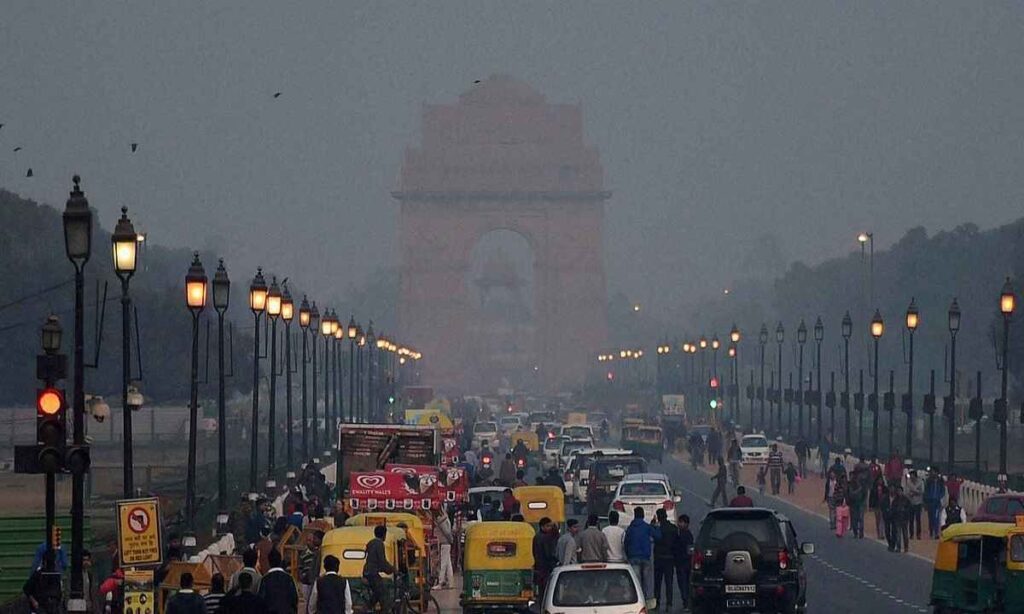
Delhi’s airborne pollution is still a major problem as wintertime draws near. Billions of people’s daily routines and overall well-being are at risk due to deteriorating air quality in the heart of the country once again. Even if the administration has implemented a number of policies to reduce airborne pollutants, the issue still arises each year.
Delhi had an Air Quality Index (AQI) of 228 at 7 AM on November 25, according to the Commission for Air Quality Management (CAQM). This is classified as “Poor.” The circumstance emphasizes the necessity of taking more aggressive measures to reduce contamination and safeguard the health of the general population.
Also Read

Forest Ecosystem Services in India Worth $2.5 Trillion
Biodiversity
Humid Heat Stress in India: A Growing Climate Threat
Environment
Online Ornamental Plant Trade May Spread Invasive Species
Environment
Harmu: The Poignant Story of a River
Environment
NITI Aayog Report: India’s Solar Manufacturing Boom Faces China Dependence Challenge
National
Junkyard of neglect: How political apathy ruined a solar plant in Uttar Pradesh’s Unnao
EnvironmentWhy Does Wintertime Increase Air Pollution?
There are multiple causes of air pollution in Delhi. Insufficient air quality is caused by a number of factors, including garbage being burned, construction-related dust, manufacturing processes, vehicular emissions, and pollution from rural fires.
Weather-related factors worsen the circumstances in the wintertime. Airborne pollutants are kept from expanding by freezing temperatures, moderate winds, and restricted atmospheric circulation. Because of this, contaminated air stays near ground level, covering the metropolis with a coating of haze.
During the time they could be harvested, trash burning in nearby states like Punjab and Haryana complicates the issue. But it’s crucial to realize that the pollution in Delhi is caused by more than just rural wildfires. Pollution from nearby places and everyday operations throughout the metropolitan area also have a significant impact.
Road dust and automobiles increase the issue.
Another significant cause of air pollution in Delhi is the increasing number of automobiles on the city’s highways. Hazardous gases and small particles are released into the environment by cars, buses, heavy vehicles, and 2-wheelers. Because cars stay on the roadways for longer than necessary, congested traffic increases the issue.
The condition of the air is significantly impacted by road contaminants and building operations. Dust is blown throughout the air by inadequately maintained construction locations, exposed materials, and damaged roadways. These substances have the potential to cause health issues by entering the respiratory tract.
The significance of regional- and local-based contamination sources was emphasized in a November 2026 report by the Center for Science and Environment (CSE).According to their research results, the biggest cause of local contamination in Delhi during the study timeframe was automobile transportation.
What Effects Does Air Pollution Have on Human Health?
Everyone of all ages are impacted by deteriorating air quality, however young children, the elderly, and those with previous respiratory illnesses are more at risk.
Coughing, difficulty breathing, swollen throats, and vision problems can all be brought on by contact with contaminated air. The possibility of infection of pulmonary and heart problems can rise with prolonged interaction with dangerous particulates.
Although their respiratory systems continue to develop, young children are particularly vulnerable. Individuals that are employed outside, such as highway cops, vendors on the streets, transportation drivers, and building contractors, are also more vulnerable to air pollution.
Air pollution is not just a problem for nature. It also impacts the capacity of individuals to live and perform their jobs properly, which is a matter of public health.
What Pollutant Prevention Measures Does the Administration Take?
To lessen pollution in Delhi-NCR, government agencies have implemented a number of initiatives. One of the key tools employed to reduce contamination when atmospheric quality declines is the Graded Response Action Plan (GRAP).
Following improvements in Delhi’s AQI, the Commission for Air Quality Management withdrew Stage III of GRAP on November 17. Stage I and Stage II measures, meanwhile, persisted.
These steps consist of minimizing development dust, improving highway sanitation, limiting traffic volume, and decreasing private vehicle ownership. In addition, officials had been instructed to keep track of contaminants from industry and boost examinations.
Officials from Delhi, Haryana, Uttar Pradesh, and Rajasthan attended an appraisal meeting arranged by the Union Environment Ministry on November 14. Improved state-to-state communication, improved pollutant tracking, and more rigorous administration of current regulations were the main topics of discussion.
Considering air pollution is not confined to a single state or metropolitan area, these actions are crucial. It necessitates a partnership between various organizations and countries.
What Can People Do to Cut Down on Air Pollution?
The involvement of the public is just as vital as action by the government. Small modifications to regular activities are one way that citizens can participate.
As an alternative to relying on personal automobiles, individuals can take advantage of buses, metropolitan amenities, subways, and ridesharing. Reducing dangerous fumes may additionally be achieved by avoiding the combustion of normal household waste and leaves.
Homeowners are responsible for making sure building-related trash is taken care of appropriately and identify operations that produce a lot of dust or dirt. Cultivating natural areas and planting greenery may contribute to a more healthy atmosphere, but they cannot substitute the advantage of taking immediate measures towards the primary causes of contamination.
Additionally, individuals should adhere to official recommendations for health and verify daily AQI status reports, particularly during times of bad atmospheric quality.
Additionally, individuals ought to stick to official health recommendations and monitor regular AQI status reports, especially when there are times of bad air quality.
Long-Term Remedies Are Needed for Healthy Air
Short limits are insufficient to address Delhi’s sustainability issue. Wintertime initiatives could offer temporary respite, but the causes of contamination need to be tackled all year long.
The long-term enhancement requires improved transportation, more environmentally friendly fuels, stronger industry controls, efficient garbage disposal, and appropriate building techniques. The National Capital Region’s governments have a responsibility to make sure that environmental control regulations are adhered to.
A healthy way of life is fundamentally dependent on good air quality. Every citizen should be able to take in oxygen freely with no concern for the quality of the oxygen they absorb. Delhi’s ongoing problem of pollution serves as an indication that preservation of the environment must remain a top concern all year long, rather than just during winter’s smog.
