
Constitution Day 2026: The Significance of India’s Constitution
Full Story
India observes Constitution Day, also called Samvidhan Diwas, on November 26 each year. The day serves as a reminder to citizens of the value of fairness, equal treatment, fairness, and the constitutionally protected freedoms.
On November 26, 2026, India will observe Constitution Day in honor of the Constituent Assembly’s 1949 approval of the country’s constitution. India’s democratic framework is based on the Constitution. It safeguards citizens’ fundamental rights and specifies the way the nation ought to be run.
Also Read

Crossing Boundaries: How India and Nepal Are Getting Stronger with the New Ayodhya–Janakpur Train
National
On November 16, Delhi Metro will begin operations for Chhath Puja at 4:30 AM
National
96.47 kg Ganja Seized at Assam-Arunachal Border, Vehicle Driver Absconds
National
On Diwali Eve, Ayodhya lights up the Sarayu Ghats with 30 lakh diyas as Deepotsav festivities get underway
National
CBSE Date Sheet 2027: Will the Board Modify the Dates of the Five Class 12 Exams Set for Holi?
National
Namibian Student Dies After Being Struck by a Train in Noida
NationalThe day also offers a chance to comprehend the principles established by the Constitution and their significance in day-to-day existence.
Why is Constitution Day observed on November 26?
On November 26, 1949, the Indian Constitution was approved by the Constituent Assembly. But on January 26, 1950, it became formally functional. For this reason, January 26 is observed as Republic Day in India.
In 2015, the Indian government formally proclaimed November 26 to be Constitution Day. The choice was made in order to raise understanding of constitutional principles and honor the contributions of those who drafted it.
India was attempting to establish a democratic framework following freedom prior to the adoption of the Constitution. The nation’s legal system, government, and people’ freedoms were all clearly defined under the Constitution.
Dr. B. R. Ambedkar and the Constitution’s Creation
Dr. B. R. Ambedkar was a key contributor to the drafting of the Indian Constitution. As the chair of the Constituent Assembly’s drafting committee, he made an important contribution to the development of its beliefs.
Following extensive deliberations and arguments amongst the Constituent Assembly representatives, the Constitution was drafted. This significant task took almost three full years to finish.
The idea of a nation where citizens of all cultures, faiths, tongues, and histories have the opportunity to live with equal privileges and respect is reflected in the Constitution.
Taking into account the Preamble and Its Principles
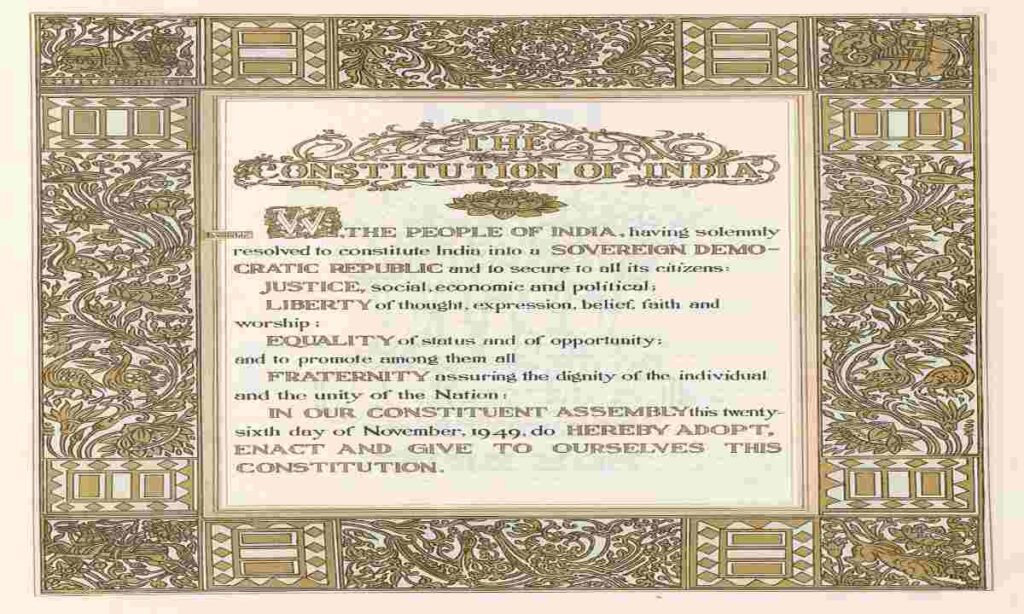
The Indian Constitution is introduced in the Preamble. It starts with the phrase “We, the People of India” and outlines the fundamental principles that constitute the nation.
It emphasizes five key concepts: justice, liberty, equality, fraternity, and the nation’s republican character.
Justice entails treating everyone equally. People with autonomy are able to freely communicate their opinions. Equality guarantees equal opportunity and consideration for all citizens. Fraternity promotes togetherness and respect for others.
Given the diversity of languages, societies, faiths, and customs found in India, these principles are crucial. Every citizen has common ground thanks to the Constitution.
What Makes Fundamental Rights Vital?
One of the most significant aspects of the Indian Constitution is the protection of fundamental rights. They assist people in living freely and with pride while safeguarding them from any unequal treatment.
The right to equality, the right to freedom, the right against exploitation, the right to freedom of religion, the right to cultural and educational rights, and the right to constitutional remedies are the six primary categories of fundamental rights outlined in the Constitution.
In daily life, such privileges are crucial. For instance, the Right to Freedom safeguards a number of fundamental liberties, such as the freedom of speech and expression, while the Right to Equality promotes fairness and equality before the law.
Additionally, the Constitution states that citizens have rights. Respecting the Constitution, preserving government assets, developing peaceful coexistence, and preserving the nation’s unity are all encouraged by fundamental duties.
Constitution Day 2026: Indian Activities
Nationwide, awareness and education initiatives are held to commemorate Constitution Day. Programs including debates, tests, essay contests, seminars, and readings of the Preamble are organized by educational institutions, colleges, universities, and government agencies.
The Preamble will be made available online in 23 languages, including English and 22 Scheduled Languages, by the Ministry of Parliamentary Affairs in 2026 via the MyGov website. To promote increased citizen participation, young people’s engagement initiatives and constitutional quizzes are additionally being planned.
The goal of these initiatives is to increase the youth’s comprehension of the Constitution.
Why It’s Important to Understand the Constitution Today?
It is still crucial for Indian folks to comprehend the Constitution regardless of many years. Although numerous individuals are aware of basic rights that they have, they might not entirely understand how these freedoms operate or the manner in which they can be safeguarded.
Through parliamentary and legal platforms, fundamental knowledge enables citizens to criticize unfair behaviors and comprehend their duties. Additionally, it promotes tolerance for many groups and viewpoints.
Exams and texts are not the only ways that pupils and young people may acquire knowledge regarding the Constitution. It aids in their comprehension of equality, social fairness, freedom of choice, and the value of civic engagement.
The Constitution serves as a guide for creating a society that is fair and equitable in addition to being an instrument of law.
Conclusion
Constitution Day is more than just a yearly holiday. Every Indian citizen is reminded of the principles and beliefs that unite the nation.
The Constitution upholds freedoms for individuals, creates harmony amongst individuals from many origins, and sets the framework for democratization. It is everyone’s duty to comprehend and uphold these values.
India’s Constitution Day 2026 serves as a signal that democracy is strengthened when people understand their privileges, carry out their responsibilities, and uphold the principles outlined in the Constitution.
