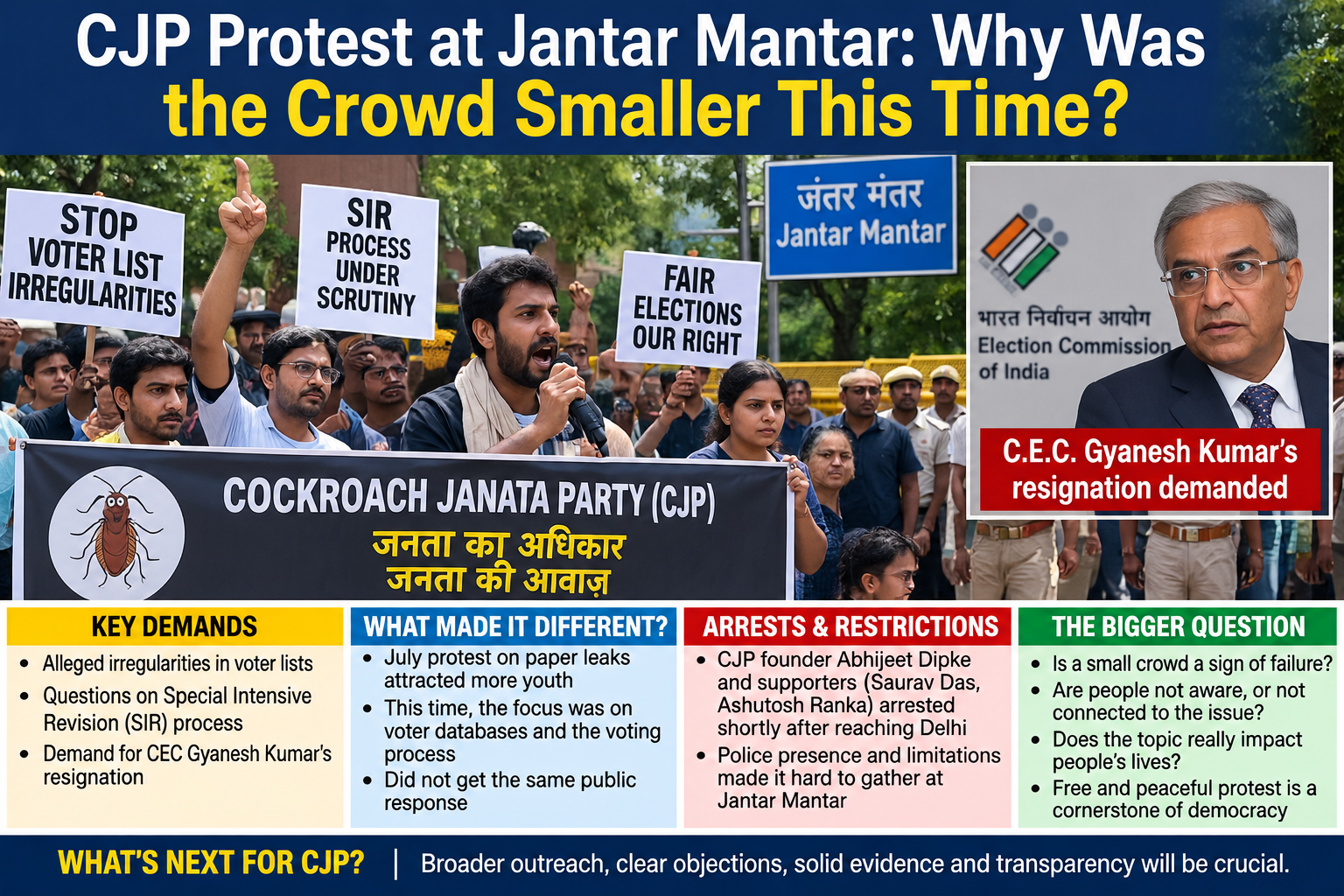






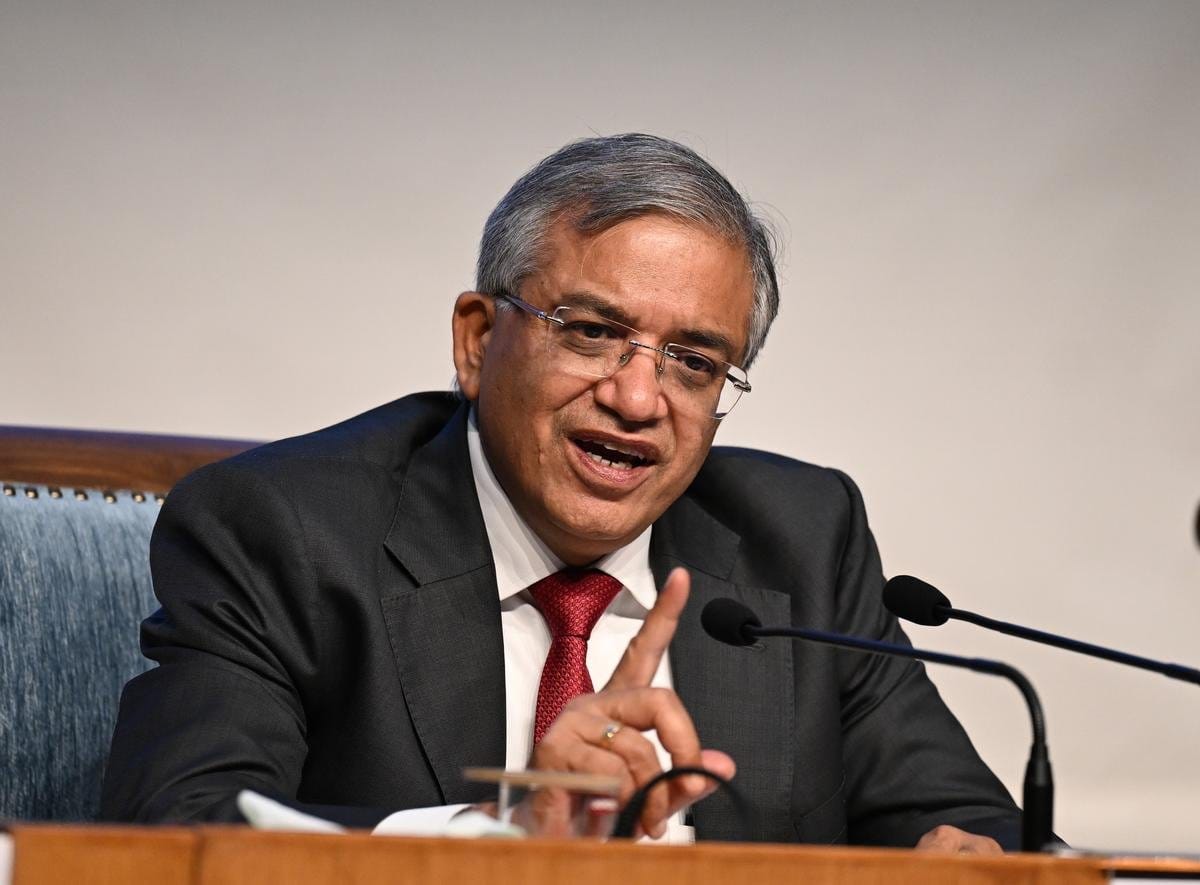
The Supreme Court has agreed to hear a petition challenging the functioning of Chief Election Commissioner (CEC) Gyanesh Kumar and the ongoing nationwide ‘SIR’ (Systematic Integration/Revision) process. On Tuesday, the Court stated that the petition would be listed before a three-judge bench next week. The petition seeks to declare the SIR process illegal and challenges the working style and actions of CEC Gyanesh Kumar.
The petition alleges that powers vested in the Election Commission as a collective body were exercised unilaterally by CEC Gyanesh Kumar. Citing Article 324 and Section 18 of the Chief Election Commissioner and Other Election Commissioners Act, 2023, the plea demands that the SIR process be declared unlawful.
Also Read: On November 16, Delhi Metro will begin operations for Chhath Puja at 4:30 AM
The petition not only questions the constitutional validity of CEC Gyanesh Kumar’s actions but also seeks to declare the SIR process—and the consequent changes made to the electoral rolls—as illegal and unauthorized from the very outset. However, the Supreme Court has not yet issued a ruling on these allegations or demands; it has merely accepted the petition for hearing and agreed to schedule the proceedings for next week.
Key issues raised in the petition
The petition was filed by Rakesh Kumar Singh. On Tuesday, Senior Advocate Vikas Singh requested an urgent hearing before a bench comprising Justice Surya Kant, Justice Joymalya Bagchi, and Justice V. Mohana.
Vikas Singh argued that the Constitution vests the power of superintendence, direction, and control of elections not in a single individual—the CEC—but in the constitutional body known as the Election Commission. He contended that since the Election Commission is a three-member body, its powers must be exercised in accordance with the collective decision-making process prescribed by the Constitution and the law.
Also Read: 96.47 kg Ganja Seized at Assam-Arunachal Border, Vehicle Driver Absconds
Article 324
The petition cites various clauses of Article 324 of the Constitution. Article 324(1) vests the authority for the superintendence, direction, and control of elections in the Election Commission. The petition argues that the Constitution confers this power upon the ‘Election Commission’ as a body, not merely upon the Chief Election Commissioner (CEC). According to Article 324(2), the Election Commission comprises the CEC and such number of other Election Commissioners as the President may fix. Meanwhile, Article 324(3) stipulates that when other Election Commissioners are appointed, the CEC acts as the Chairman of the Commission.
The petitioner contends that the Constitution distinguishes between these two aspects: while the CEC is the Chairman of the Commission, he is not synonymous with the Commission as a whole. The petition asserts that the role of Chairman cannot be equated with the collective constitutional power of the Commission.

Related News
- National On November 16, Delhi Metro will begin operations for Chhath Puja at 4:30 AM
- National 96.47 kg Ganja Seized at Assam-Arunachal Border, Vehicle Driver Absconds
- National On Diwali Eve, Ayodhya lights up the Sarayu Ghats with 30 lakh diyas as Deepotsav festivities get underway
- National CBSE Date Sheet 2027: Will the Board Modify the Dates of the Five Class 12 Exams Set for Holi?