




Introduction
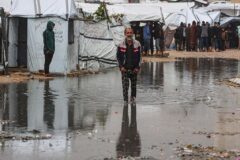
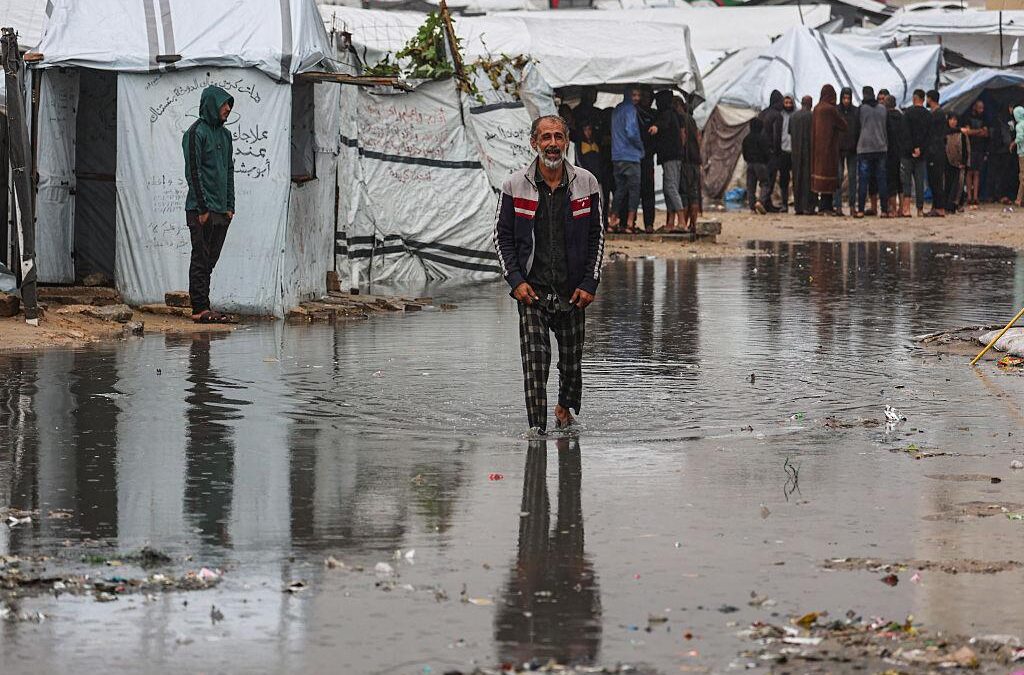
The start of the season of rainfall led to another cycle of suffering to hundreds of thousands of displaced households in Gaza. Several thousand improvised shelters have been inundated by heavy rains, making it difficult for people to keep their kids, possessions, and what little they were able to keep safe.Many folks who have lost their houses might find themselves forced to
spend freezing, stormy nights lacking an adequate place to call home.Issues regarding Palestinian civilians’ living circumstances and the scarcity of humanitarian supplies continue to be highlighted by the circumstances.Around 70,000 shelters have reportedly been impacted by water, and inhabitants have additionally been hurt by crumbling walls and roofing. The problem
demonstrates that Gaza’s general population has difficulties outside of the continuous fighting.Access to essential amenities, such as sanitation services, clean water to consume, accommodation, and medical attention, is still a major problem.
Also Read: Instagram’s Shifting Algorithms: Who Chooses What India Views Online?
For displaced households, heavy downpours make life tougher
The state of Gaza’s temporary accommodations has been made clear by the latest downpour. Numerous internally displaced individuals are residing in camps that have become inadequate for
protecting them from heavy rainfall, severe storms, and dropping weather.Individuals werecompelled to get away from rainwater from their homes using dishes, pots, and containers.However, those whose houses have already been damaged or surrounded by swampyand waterlogged terrain have not benefited much because of these short-term measures.The
government in Gaza, which is controlled by Hamas, claims that some 70,000 tents have leaked. Numerous broken walls as well as roofs have collapsed, causing bodily harm, particularly several extreme cases, according to sources.Rainfall is more than just a periodic inconveniencefor those residing in such areas.It could compromise their well-being, security, and capacity toendure the winter that lies ahead.
Women and Children Face More Challenges
Also Read: On November 16, Delhi Metro will begin operations for Chhath Puja at 4:30 AM
During the current humanitarian emergency, kids have been amongst the greatest disadvantaged. Several households are residing in cramped shelters lacking sufficient beds, warmth, or comfortable clothing.Kids are vulnerable to freezing temperatures and unsanitary conditions whenever precipitation seeps into such structures.Deir al-Balah resident Maryam Odeh, 34, talked about the challenges she faces in keeping her kids safe.She clarified that although her kids frequently question where they would sleep, she is unable to provide them with an answer that is definitive.Countless people struggle to offer simply the simplest basic essentials for their loved ones, and her circumstances mirror this confusion. Another neighbor, Khaled al-Najjar,
also highlighted worries concerning the dangers of spreading diseases, severe flooding, and harsh temperature.These incidents demonstrate how daily household activities are impacted by humanitarian emergencies. In addition to getting water and nourishment, families are concernedabout keeping their kids healthy and giving them a comfortable place to sleep.
A lack of humanitarian assistance worsens the situation
The lack of necessary aid in Gaza has additionally come to light as a result of the ongoing aforementioned flooding. In order to safeguard displaced households from unpredictable weather, standard tarpaulins, normal sized plastic sheets, camping equipment, and various other basic goods are required. Medical organizations, meanwhile, are having trouble delivering enough aid. The circumstances are critical, according to Jonathan Veitch, UNICEF’s Palestine representative. He clarified that individuals were contacting reputable charities on public transit and asking for urgent assistance during his remarks from Deir al-Balah. He also mentioned limitations on the flow of crucial goods and massive machinery into Gaza. Automobiles and equipment needed for humanitarian efforts depend on things like regular motor oil. Veitch claims that the accessibility of supplies required to assist displaced individuals has also been impacted by cuts to UN funding. As a result, aid organizations have a responsibility to make tough choices concerning the distribution of scarce commodities. This circumstance highlights a critical issue: emergency assistance is required to be made readily available in accordance with people’s requirements, particularly when hundreds of thousands of households are in serious danger.
Supply Limitations Raise Concerns Regarding Basic Humanitarian Accessibility
One of the biggest problems is still getting supplies for humanitarian purposes into Gaza. According to Israel, regulations are required to keep supplies that could potentially be utilized for armed forces out of the country. But aid organizations are additionally concerned about the accessibility of vital supplies needed for ordinary civilian well-being as a result of the imposed
limits. In order to fix collapsed structures and enhance standard of living, large machinery petroleum-based resources, temporary accommodation, and additional building supplies are essential. Relief organizations struggle to adjust to crises without enough supplies and tools, especially in severe conditions. The circumstance emphasizes how crucial it is to guarantee that emergency aid is delivered to people in need without any unnecessary postponements. The lack of necessary supplies shouldn’t put individuals who suffered the loss of their residences in worse situations.
An Unpredictable Winter Weather Awaits a Huge Relocated Human Population
The conflict between Israel and Hamas has resulted in the displacement of about 90% of Gaza’s population, with many citizens being forced to flee where they live several times. Nearly every facet of everyday life has been impacted by displaced people. Individuals have been stripped of the ability to obtain numerous basic needs, their residences, and their means of subsistence.
Many still reside in improvised housing with little availability of sanitary facilities and safe drinking water. These circumstances become particularly challenging when the season of heavy rainfall arrives.As temperatures continue to drop, humanitarian organizations have cautioned that the circumstances might become increasingly dangerous. Additionally, Veitch recalled the
hypothermia-related death rates from the winter before and cautioned that comparable outcomes might occur in the absence of immediate action. Being overcrowded, unsanitary conditions, wet clothes, and waterlogged sheltered areas can all raise the possibility of respiratory tract infections and various other diseases. Even basic medical conditions may grow increasingly severe for those who currently have restricted availability of medical care. Therefore, world leaders and humanitarian organizations in particular need to pay immediate consideration to the approaching winter season.
The humanitarian situation remains to be resolved by the ceasefire
In October 2025, a ceasefire was implemented in Gaza, but the scenario is still tense. According to reports, Israeli airstrikes have persisted, killing innocent people as well. As of the start of the ceasefire, about 1,580 people have died in Gaza, as reported by the health ministry run by Hamas. The ministry’s mortality statistics are regarded as trustworthy by the UN.In the aftermath of the Hamas-led attack on Israel on October 7, 2023, which resulted in about 1,200 deaths and 251 hostages, the broader armed conflict started.According to Gaza’s health ministry, approximately 74,594 Palestinians have died since the start of the conflict.The Trump
administration’s peace plan has also encountered challenges, raising doubt on the prospects of establishing stability over the long term. These changes show that the effects of an extended conflict are incapable of being resolved by a ceasefire only. Ongoing governmental and humanitarian initiatives are needed to reconstruct housing standards, restore services to the public, and guarantee having access to basic necessities.
The Urgent Need for Fundamental Humanitarian Intervention
Dozens of shelters in Gaza have flooded; this is not a typical weather-driven issue. It is a component of a broader humanitarian situation where displaced households are having difficulty obtaining needs.Resistant structures, comforting blankets, comfortable clothing, safe water to consume, and sanitary amenities must be provided right away. Additionally, medical personnel need to be ready to handle medical conditions and harm that can rise in the wintertime.Authorities and global organizations must make sure that enough humanitarian assistance can reach Gaza. Children, women, the elderly, and those suffering from impairments
ought to be given priority in aid operations because they may encounter more challenges throughout calamities.Future-proof improvements are just as crucial. Families require possibilities to start again, secure and long-term homes, accessibility to medical services, and operational institutions of learning.
Conclusion
The harsh truth that hundreds of thousands of displaced Palestinians are living with has been made clear by a particularly intense downpour in Gaza. Even a minor shift in the environment can pose a major risk to individuals residing in destroyed shelters.The capacity of individuals to endure the battle is not anymore their primary concern; they additionally have to consider themanner in which they will deal with the day-to-day difficulties that come with being displaced. When it pours down, kids ought not to be concerned regarding how they’re going to rest.Obtaining sufficient nourishment during the following day and shielding family members from freezing temperatures shouldn’t need to be mutually exclusive.Assistance for humanity must provide more than just short-term comfort. Individuals require protection, respect, and the chance to start over.International organizations need to realize how urgent the scenario is as wintertime draws near. For those who have already gone through many years of loss and
unpredictability, postponed help could result in life-threatening consequences. Safeguarding human life is required to be the first concern.

Related News
- International Australia Announces Additional A$15 Million Aid for Nepal Flood Victims
- International Bangladesh Announces 3-Day Durga Puja Holiday; Government Employees to Get 5-Day Break
- Special News Nobel Prize in Physics 2026: Belgian-Born Scientist Francis Halzen Honoured for Neutrino Discovery
- International North Korea Fires Ballistic Missile, Travels Over 700 Km Amid Rising DMZ Tensions