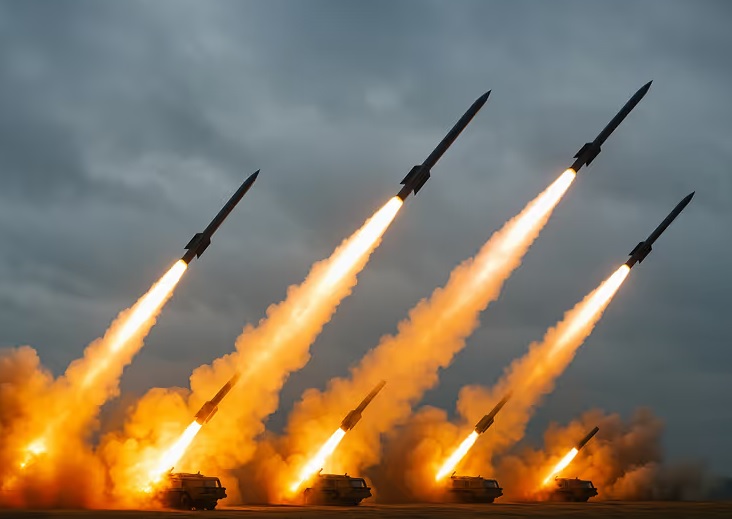




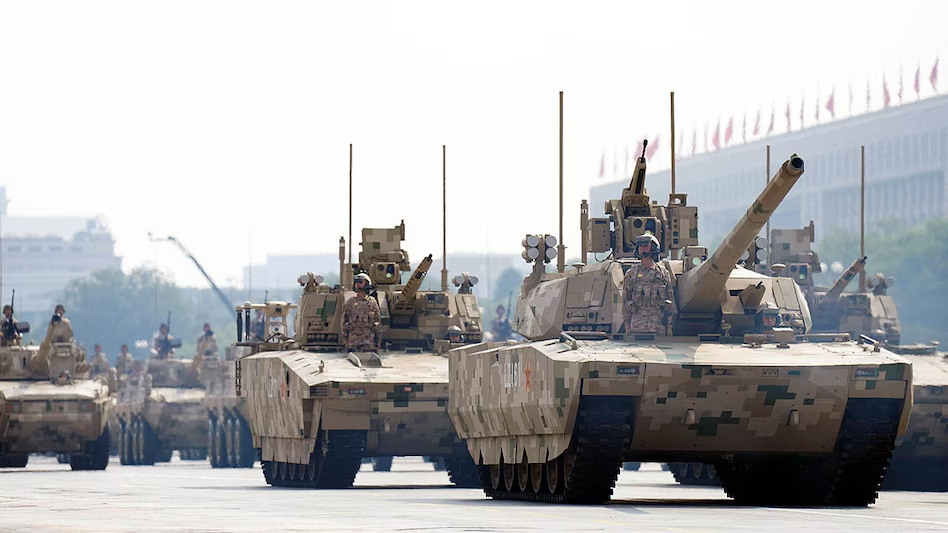
Beijing: Chinese military researchers have unveiled a concept for a future armored vehicle proposed to be powered by nuclear energy and equipped with an electromagnetic railgun. According to the research, the railgun on this proposed 60-tonne vehicle could have a theoretical strike range of approximately 450 kilometers. However, this remains a research concept for now and has not been deployed as an actual military tank.
Proposed Vehicle to Weigh 60 Tonnes
The study by Chinese researchers envisions an armored vehicle weighing around 60 tonnes. The plan proposes using a Small Modular Nuclear Reactor (SMR) with a capacity of approximately 10 megawatts as the power source in the final stage.
This energy is intended to power a 50-megajoule electromagnetic railgun. The research claims that the projectile’s theoretical speed could reach about 3.5 kilometers per second, with a maximum theoretical range of approximately 450 kilometers.
Plan for Development in Three Stages
Researchers have proposed developing this concept in three stages rather than all at once.
First Stage—Before 2035: The focus will be on mounting electromagnetic weapons onto existing armored vehicles. This stage proposes an electromagnetic gun with a capacity of about 10 megajoules and a theoretical range of approximately 150 kilometers.
Also Read: Australia Announces Additional A$15 Million Aid for Nepal Flood Victims
Second Stage—2035 to 2045: This stage involves increasing the weapon’s energy capacity to around 20 megajoules and extending the proposed range to approximately 300 kilometers. The use of advanced energy storage technologies is proposed for this purpose.
Third Phase—Post-2045: The final phase envisions a nuclear-powered vehicle. It proposes equipping the vehicle with a 10-megawatt class small modular reactor and a 50-megajoule railgun.
Significant Technical Challenges Ahead
Transforming this concept into a functional military system will not be easy. Further research requires multi-physics simulations and vehicle-level testing. Major challenges include fitting a nuclear reactor into a confined space, ensuring radiation protection, managing heat, and balancing the vehicle’s weight.
Experts have also questioned the feasibility of installing a nuclear reactor in a tank. The reactor, along with its shielding, power-conversion, and cooling systems, would require additional space and weight, potentially straining the armored vehicle’s design.
Currently Just Research and a Future Concept
This proposal by Chinese researchers is based on the potential for energy and weapon systems in future armored vehicles. While it outlines a possible trajectory for a nuclear-powered variant post-2045, it cannot be considered a weapon system ready for production or deployment at present.

Related News
- International As countless shelters are flooded by heavy downpours, Gaza’s displaced households will endure an additional difficult wintertime
- International Australia Announces Additional A$15 Million Aid for Nepal Flood Victims
- International Bangladesh Announces 3-Day Durga Puja Holiday; Government Employees to Get 5-Day Break
- Special News Nobel Prize in Physics 2026: Belgian-Born Scientist Francis Halzen Honoured for Neutrino Discovery