




Study estimates cumulative economic losses of ₹1.76 lakh crore between 2011-12 and 2022-23; construction, agriculture, manufacturing and mining account for nearly 70% of losses
Ranchi: Rising temperatures are emerging as a significant economic risk for Jharkhand, extending beyond public health and climate concerns. According to a new report released by the Center for Environment and Energy Development (CEED), heat-related labour productivity losses caused an estimated cumulative economic loss of ₹1.76 lakh crore in the state between 2011-12 and 2022-23, equivalent to 8% of its cumulative Gross State Value Added (GSVA).
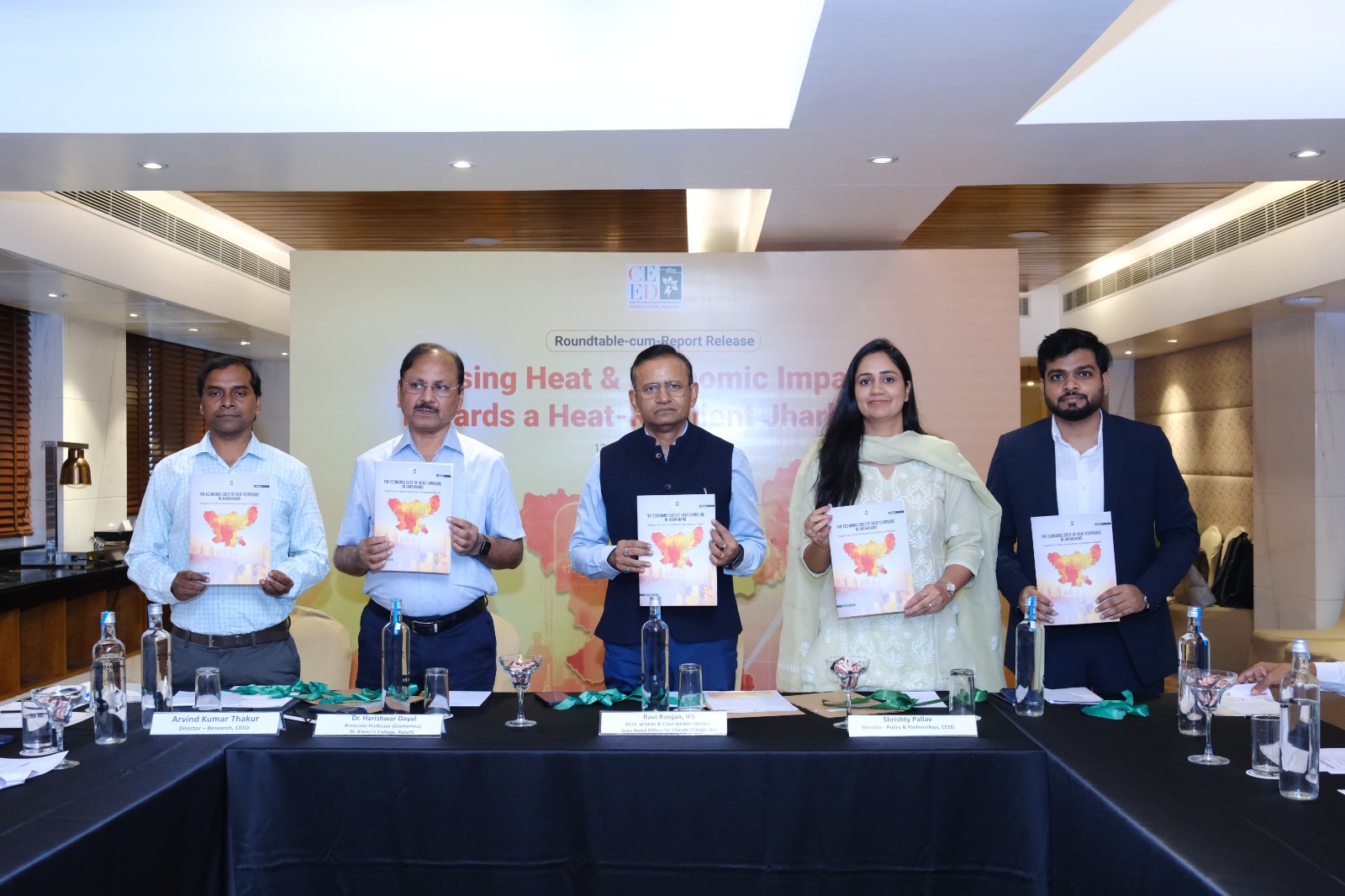
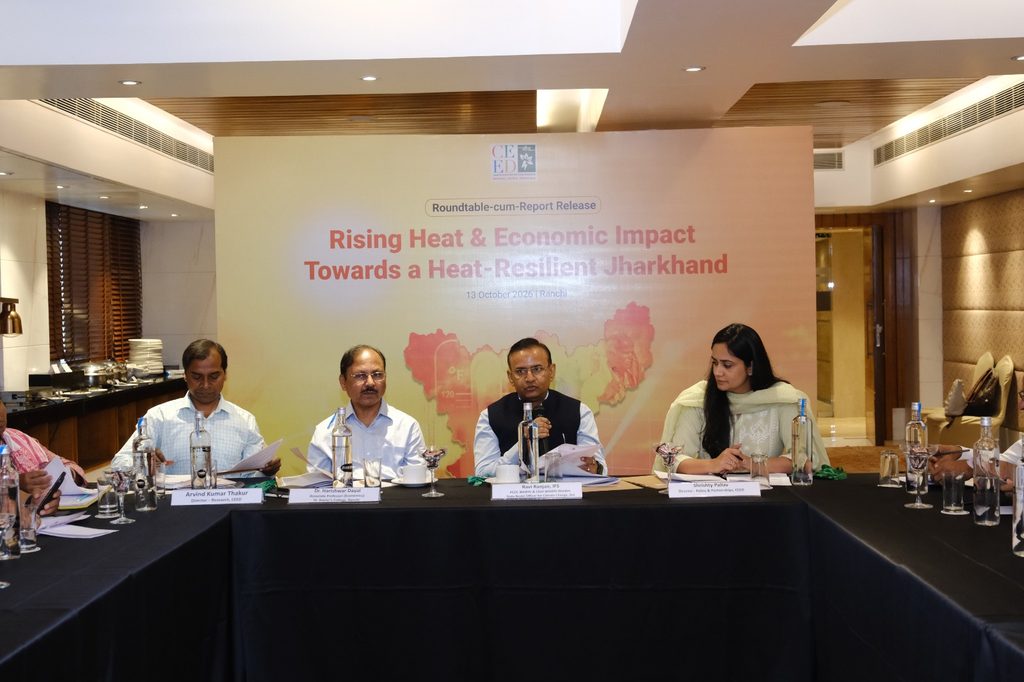
The report projects that cumulative economic losses could rise to ₹9.35 lakh crore between 2023-24 and 2047-48, accounting for 10.31% of the state’s projected GSVA. The findings were presented during a roundtable discussion titled ‘Rising Heat and Economic Impact: Towards a Heat Resilient Jharkhand’, organised by CEED in Ranchi on October 13.
Also Read: ONTHHPC Crowned Champions of 54th Nehru Junior Hockey Tournament After Three Years
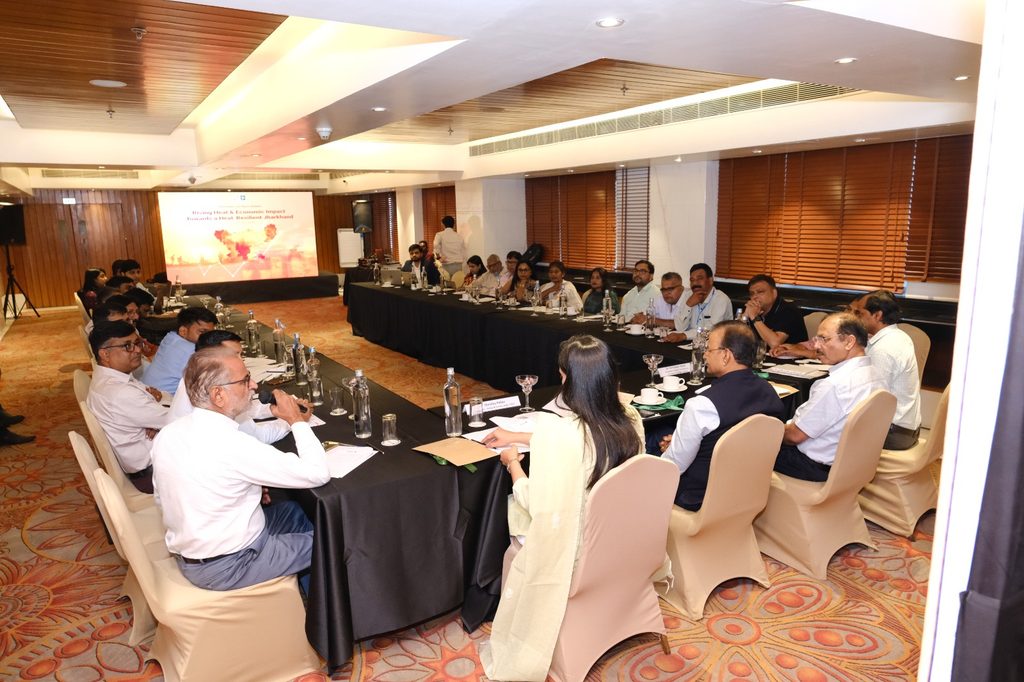
The consultation brought together senior government officials, industry and business associations, micro, small and medium enterprises (MSMEs), labour unions, community representatives and civil society organisations to discuss the economic consequences of heat exposure and measures to strengthen the state’s resilience.
Direct Economic Losses Estimated at ₹4.70 Lakh Crore
The CEED report combines state-level economic data with established evidence on the relationship between heat exposure and labour productivity. It examines sector-wise economic losses from 2011-12 to 2022-23 and projects future impacts up to 2047-48, using 2011-12 as the base year.
Of the estimated ₹1.76 lakh crore in cumulative losses recorded between 2011-12 and 2022-23, approximately ₹87,000 crore, or 3.97% of cumulative GSVA, represents direct economic losses. The remaining losses arise from indirect, economy-wide impacts.
Also Read: High Court Quashes Government Order to Cancel JSSC-CGL; Relief for 1,932 Candidates
For the period from 2023-24 to 2047-48, direct economic losses are projected to reach ₹4.70 lakh crore, equivalent to 5.18% of projected GSVA. The total projected losses, including indirect impacts, stand at ₹9.35 lakh crore.
The findings highlight how heat can affect economic activity even without causing visible physical damage to buildings, roads or machinery. Instead, the impact is felt through reduced working hours, declining labour productivity, construction delays and lower agricultural output.
Construction and Agriculture Among Worst-Affected Sectors
The report identifies labour-intensive sectors and activities carried out in open, outdoor or unshaded environments as particularly vulnerable to rising temperatures.
Between 2011-12 and 2022-23, the construction sector accounted for the largest share of cumulative heat-related economic losses at 25%. Agriculture, forestry and fishing contributed 11%, followed by transport, storage and communication at 10%, manufacturing at 8%, and mining and quarrying at 7%.
Together, construction, agriculture, manufacturing and mining accounted for nearly 70% of the economic losses, reflecting their dependence on physically demanding work and outdoor labour.
Unlike floods and storms, heat exposure often leaves no obvious physical damage to infrastructure. Its financial consequences can therefore remain largely invisible in conventional economic assessments, even as workers experience reduced productivity and households face declining incomes.
Climate Planning and Preventive Measures Crucial for Resilience
Ravi Ranjan, IFS, Principal Chief Conservator of Forests (Wildlife and Chief Wildlife Warden) and State Nodal Officer for Climate Change, Government of Jharkhand, said the findings highlight the need for long-term planning and preventive measures to protect the workforce.
He noted that the state’s climate action plan already includes relief and heat-mitigation measures in vulnerable regions. Protecting green spaces in urban and rural areas, adopting cool-roofing materials and expanding shaded public spaces can help minimise heat-related risks.
He also emphasised that community-centred action can strengthen the state’s efforts to build climate resilience.
CEED Calls for State and District Heat Action Plans
Ramapati Kumar, CEO of CEED, said the concentration of economic losses in key sectors underlines the importance of incorporating heat risks into sector-specific planning.
He stressed the need to develop and implement State and District Heat Action Plans that include measures to protect workers and communities. Government departments must coordinate their efforts, integrate heat risks into budgeting and programme implementation, and strengthen institutional capacity for long-term climate resilience.
Kumar added that CEED would continue supporting the state government’s efforts through research and solution-oriented consultations.
Heat Stress Threatens Workers and Household Incomes
Dr Harishwar Dayal, Associate Professor of Economics at St. Xavier’s College, Ranchi, highlighted the vulnerability of workers engaged in outdoor and physically demanding occupations.
He observed that limited access to cooling facilities, shaded workspaces and flexible working arrangements can reduce productivity and affect household incomes, particularly among vulnerable communities whose livelihoods depend on outdoor activities.
The consultation was moderated by Shrishty Pallav, Director of Policy and Partnership at CEED, who emphasised the importance of Heat Action Plans, coordination among government departments and effective collaboration among industries, businesses, MSMEs and civil society organisations.
The report was presented by Sikhar Singh of CEED.
Key Recommendations to Reduce Heat-Related Economic Losses
The roundtable identified several measures to strengthen heat resilience across Jharkhand’s economy. These include:
- Developing and implementing State and District Heat Action Plans.
- Integrating heat resilience into urban and rural development, industrial planning and infrastructure projects.
- Incorporating heat-safety requirements into building regulations and industrial approvals.
- Promoting heat-resilient agricultural practices in vulnerable districts.
- Restructuring VB-G RAM G work calendars to improve worker safety during periods of extreme heat.
- Ensuring that public worksites provide shaded areas, basic amenities and adequate rest periods for workers.
The report’s findings underline the growing need to treat heat exposure as an economic planning priority rather than solely an environmental or public health issue. By integrating heat-risk assessments into development planning and protecting workers in vulnerable sectors, Jharkhand can work towards reducing future economic losses while building a more resilient and sustainable economy.

Related News
- Jharkhand ONTHHPC Crowned Champions of 54th Nehru Junior Hockey Tournament After Three Years
- Jharkhand High Court Quashes Government Order to Cancel JSSC-CGL; Relief for 1,932 Candidates
- Jharkhand DPS Ranchi Honours 145 Primary Wing Students for Academic Excellence
- Jharkhand Preservation of the Traditions, Culture, and Identity of the Tribal Community is Essential: Chief Minister Hemant Soren